

Table of Contents
- What Is Oleocanthal? The Olive Oil Anti-Inflammatory Compound
- Oleocanthal vs Ibuprofen: How Oleocanthal Olive Oil Anti-Inflammatory Power Compares
- The Throat Test: Your Built-In Oleocanthal Olive Oil Anti-Inflammatory Detector
- Beyond Pain Relief: Proven Oleocanthal Benefits for Your Whole Body
- How Much Oleocanthal Olive Oil Anti-Inflammatory Compound Do You Need Daily?
- Which Olive Oil Varieties Deliver the Strongest Oleocanthal Olive Oil Anti-Inflammatory Effect?
- How to Maximise Your Natural Anti-Inflammatory Olive Oil Intake
- Pure Chetoui Lab Data: Oleocanthal Olive Oil Anti-Inflammatory Proof in Numbers
- Frequently Asked Questions About Oleocanthal Olive Oil Anti-Inflammatory Properties
The oleocanthal olive oil anti-inflammatory compound is one of the most remarkable natural discoveries in modern nutrition science. If you have ever tasted real extra virgin olive oil and felt a sharp peppery sting at the back of your throat, you have experienced oleocanthal firsthand. Since its formal identification in 2005, researchers have confirmed that oleocanthal olive oil anti-inflammatory activity rivals that of ibuprofen, making it one of the most promising natural anti-inflammatory olive oil compounds ever studied. In this comprehensive guide, you will learn exactly how oleocanthal works, what the latest science says about high-polyphenol olive oil benefits, and why an oil testing at 733.3 ppm polyphenols delivers the oleocanthal olive oil anti-inflammatory potency your body needs.
What Is Oleocanthal? The Olive Oil Anti-Inflammatory Compound
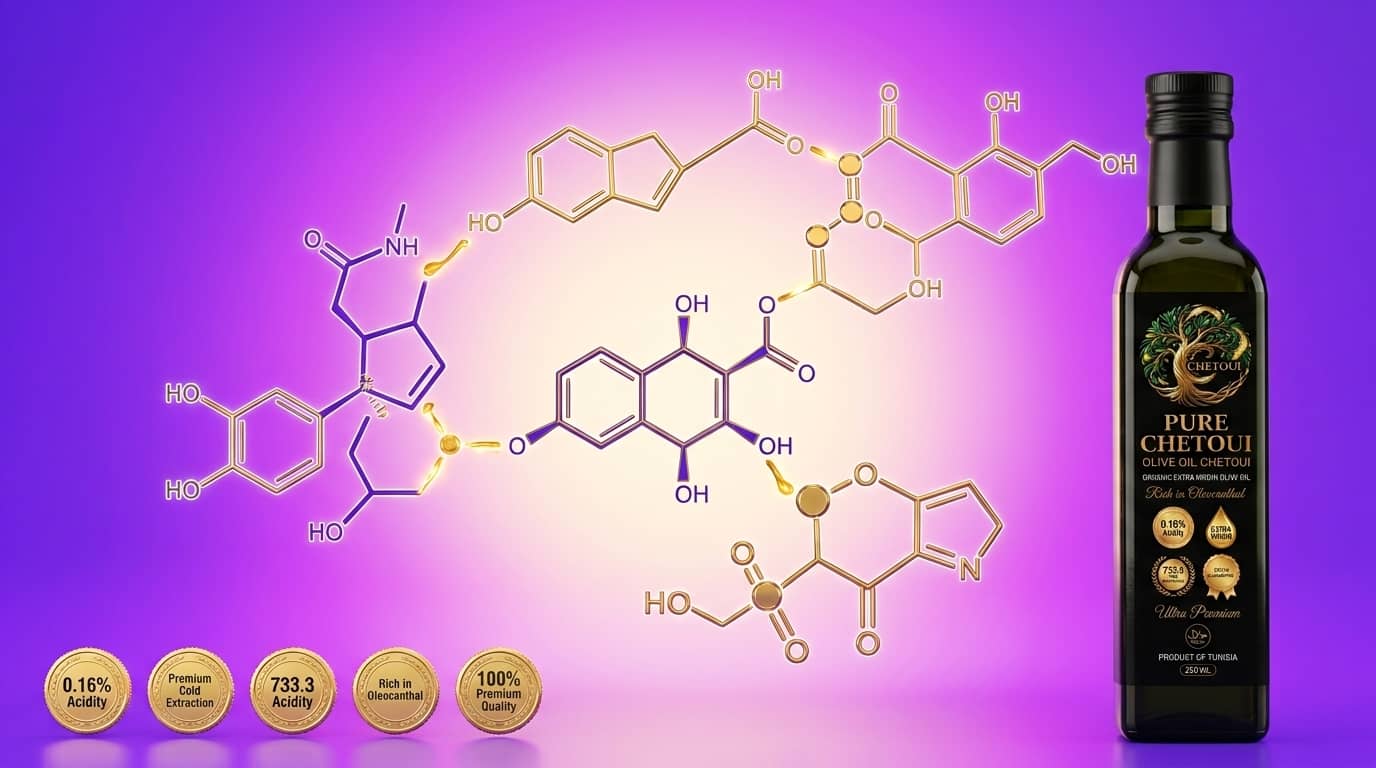
Oleocanthal (oleo = olive, canth = sting, al = aldehyde) is a natural phenolic compound found exclusively in extra virgin olive oil. Dr. Gary Beauchamp at the Monell Chemical Senses Center first noticed that premium olive oil produced the same throat irritation as liquid ibuprofen. That observation led to a groundbreaking 2005 study published in Nature confirming that oleocanthal olive oil anti-inflammatory action works through inhibition of cyclooxygenase (COX) enzymes, specifically COX-1 and COX-2, which produce inflammatory prostaglandins in the human body.
What makes oleocanthal olive oil anti-inflammatory activity truly special is its mechanism. Unlike synthetic drugs, oleocanthal works within the whole food matrix of extra virgin olive oil. It operates alongside other polyphenols such as hydroxytyrosol and oleuropein, creating a synergistic effect that isolated compounds cannot replicate. This means you get oleocanthal benefits without the gastrointestinal damage associated with long-term NSAID use.
The European Food Safety Authority (EFSA) has recognised that olive oil polyphenols, including oleocanthal, contribute to the protection of blood lipids from oxidative stress. This official health claim requires a minimum of 5 mg of hydroxytyrosol and its derivatives (which includes oleocanthal) per 20 g of olive oil daily. Oils with 733 ppm polyphenols, like Pure Chetoui, far exceed this threshold.
Oleocanthal vs Ibuprofen: How Oleocanthal Olive Oil Anti-Inflammatory Power Compares
The oleocanthal vs ibuprofen comparison is one of the most studied topics in olive oil research. Both compounds share a remarkably similar anti-inflammatory mechanism, yet oleocanthal olive oil anti-inflammatory action offers distinct advantages over its pharmaceutical counterpart.
Here is how oleocanthal olive oil anti-inflammatory activity stacks up against ibuprofen:
- Same enzymatic pathway: Both oleocanthal and ibuprofen inhibit COX-1 and COX-2 enzymes, the key drivers of inflammatory prostaglandin production
- Dose equivalence: Approximately 50 ml of high-quality olive oil delivers oleocanthal olive oil anti-inflammatory activity equivalent to roughly 10% of a standard adult ibuprofen dose (200 mg)
- Cumulative daily protection: Unlike a one-time ibuprofen pill, daily oleocanthal olive oil anti-inflammatory intake provides sustained, low-level protection that compounds over weeks and months
- No gastric damage: Ibuprofen causes gastric ulcers with chronic use, while oleocanthal in low-acidity olive oil (FFA 0.16%) actually supports gut health
- Broader biological activity: Oleocanthal benefits extend to neuroprotection, cardiovascular health, and anti-cancer research, areas where ibuprofen has no proven role
A 2011 study in Molecular Nutrition & Food Research confirmed that oleocanthal olive oil anti-inflammatory potency is dose-dependent. The more oleocanthal in your oil, the stronger the effect. This finding is why polyphenol concentration matters so much when choosing a natural anti-inflammatory olive oil for daily consumption.

The Throat Test: Your Built-In Oleocanthal Olive Oil Anti-Inflammatory Detector
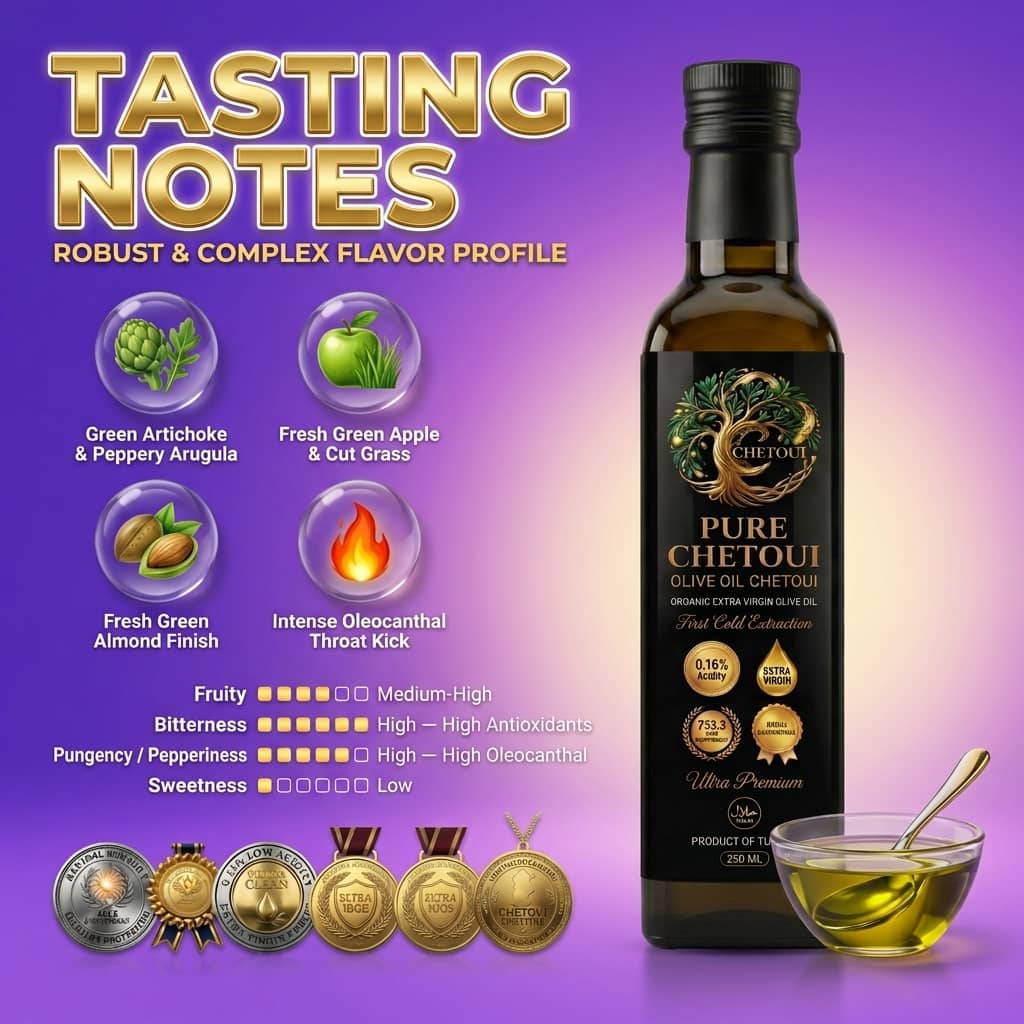
Your body has a built-in oleocanthal detector, and it sits right in your throat. The TRPA1 receptor responds specifically to oleocanthal, producing the distinctive peppery sting that olive oil experts call “throat catch.” This biological response tells you exactly how much oleocanthal olive oil anti-inflammatory compound is present in any oil you taste.
Here is the scale professional tasters use to judge oleocanthal olive oil anti-inflammatory strength:
- Strong throat burn (1-2 coughs): High oleocanthal concentration, powerful anti-inflammatory activity. This is what you feel with 700+ ppm polyphenol oils
- Mild tingle at the back of the throat: Moderate oleocanthal levels, some oleocanthal benefits present but at lower potency
- No sensation at all: Very low or absent oleocanthal, minimal anti-inflammatory effect, likely refined or degraded oil
This throat test is why olive oil competitions, including the NYIOOC World Olive Oil Competition (where our estate has earned 82 Awards, including 46 Gold and 36 Silver), evaluate pungency as a positive quality marker. When judges rate an oil’s peppery kick, they are effectively measuring its oleocanthal olive oil anti-inflammatory potential.
Pure Chetoui, our Chetoui cultivar from Northern Tunisia, produces a noticeable 2-cough peppery kick at 733.3 ppm polyphenols. First-time tasters immediately notice this natural anti-inflammatory olive oil potency. That sting is not a defect; it is proof of therapeutic strength.
Beyond Pain Relief: Proven Oleocanthal Benefits for Your Whole Body
The oleocanthal benefits extend far beyond simple pain management. Researchers have documented oleocanthal olive oil anti-inflammatory effects across multiple body systems. Here is what the science currently shows.
Joint Health and Osteoarthritis
Oleocanthal olive oil anti-inflammatory action directly targets the inflammatory cytokines that destroy joint cartilage. A 2014 study in the International Journal of Molecular Sciences found that oleocanthal inhibits IL-1B and TNF-a, two inflammatory molecules responsible for cartilage breakdown in osteoarthritis. For anyone managing chronic joint pain, daily oleocanthal benefits may reduce reliance on pharmaceutical NSAIDs over time.
Neuroprotection and Brain Health
Research from the University of Louisiana at Monroe discovered that oleocanthal enhances clearance of beta-amyloid proteins, the toxic plaques associated with Alzheimer’s disease. Oleocanthal olive oil anti-inflammatory compounds boost the activity of transport proteins at the blood-brain barrier, helping the brain remove these harmful deposits more efficiently. This is one of the most promising oleocanthal benefits currently under investigation.
Cancer Cell Research
Multiple cell studies have shown oleocanthal can trigger apoptosis (programmed cell death) in cancer cells while leaving healthy cells unharmed. A 2015 study in Molecular & Cellular Oncology found oleocanthal ruptures cancer cell lysosomes within 30 minutes. This research is still early-stage and does not mean olive oil cures cancer, but it highlights the unique biological activity behind oleocanthal olive oil anti-inflammatory compounds.
Cardiovascular Protection
Oleocanthal reduces platelet aggregation (blood clotting) through the same mechanism as low-dose aspirin, offering natural cardiovascular protection without the bleeding risk. Combined with the high oleic acid content (65.24%) found in quality oils like Pure Chetoui, these oleocanthal benefits create comprehensive heart health support. People following a keto diet with olive oil gain these cardiovascular oleocanthal benefits alongside healthy fat intake.
Antioxidant Synergy
Oleocanthal does not work alone. In a natural anti-inflammatory olive oil, it operates alongside squalene (4,023.80 mg/kg in Pure Chetoui) and alpha-tocopherols (446.6 mg/kg), creating antioxidant synergy that amplifies overall oleocanthal benefits. This whole-food matrix effect is why drinking the actual oil outperforms any oleocanthal supplement on the market.
How Much Oleocanthal Olive Oil Anti-Inflammatory Compound Do You Need Daily?
Research suggests meaningful oleocanthal benefits begin at approximately 5 to 9 mg of oleocanthal per day. The critical factor is the polyphenol concentration of your oil. Most commercial olive oils simply do not contain enough oleocanthal olive oil anti-inflammatory compound to reach this threshold without excessive calorie intake.
Here is a practical comparison based on polyphenol levels:
- Standard supermarket EVOO (80-150 ppm polyphenols): You would need 4 to 6 tablespoons daily, adding 480 to 720 unnecessary calories. The oleocanthal olive oil anti-inflammatory dose is impractical at this concentration
- Good quality EVOO (300-500 ppm polyphenols): Two to three tablespoons daily reaches the threshold, a workable amount for most people
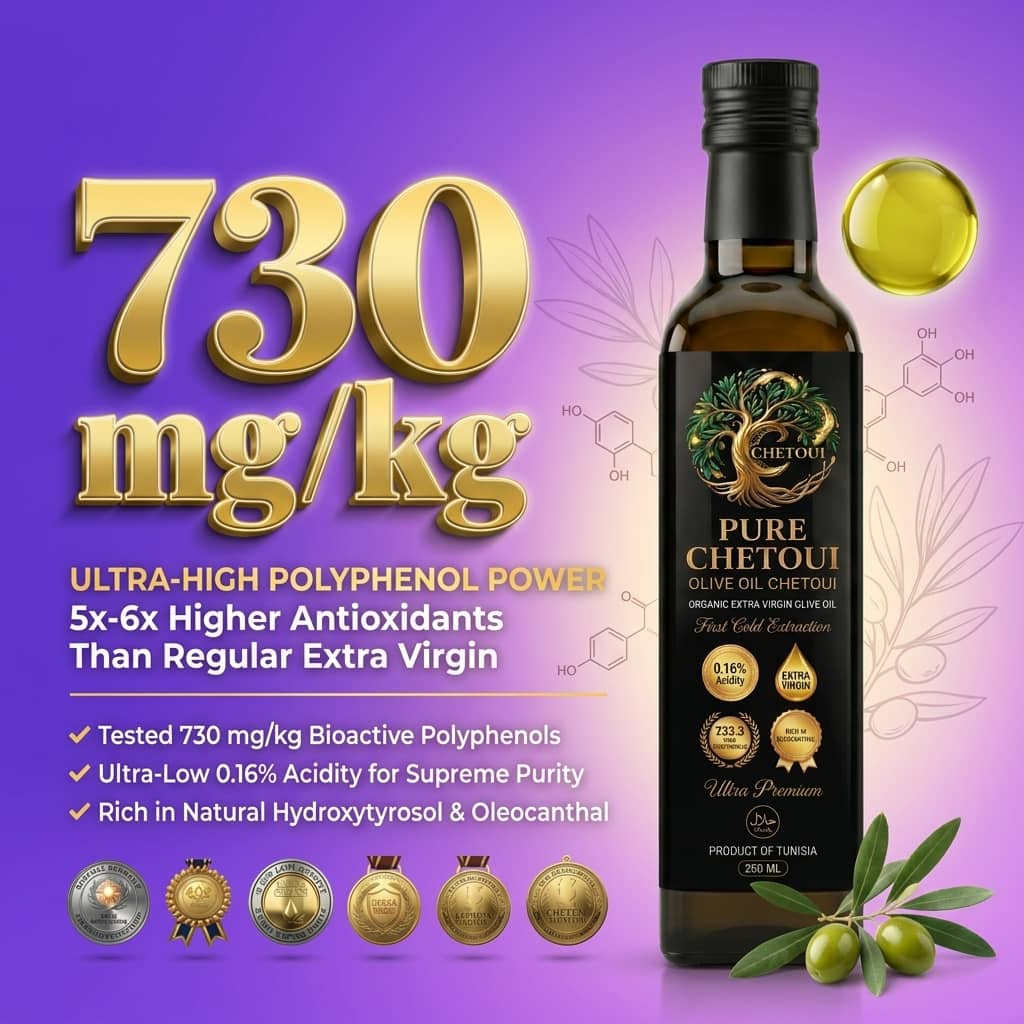
- High-polyphenol EVOO like Pure Chetoui (733.3 ppm polyphenols): Just one tablespoon (15 ml) provides a full therapeutic oleocanthal olive oil anti-inflammatory dose
This is why polyphenol concentration is the single most important number on any olive oil label. One tablespoon of a 733 ppm natural anti-inflammatory olive oil delivers more oleocanthal than four tablespoons of standard oil, at a quarter of the calories. For maximum absorption, take your tablespoon on an empty stomach first thing in the morning.

Which Olive Oil Varieties Deliver the Strongest Oleocanthal Olive Oil Anti-Inflammatory Effect?
Not all olive cultivars produce equal oleocanthal levels. Genetics, harvest timing, and processing method all determine how much oleocanthal olive oil anti-inflammatory compound ends up in your bottle. Here are the top cultivars ranked by typical polyphenol and oleocanthal production:
- Chetoui (Tunisia): Consistently the highest polyphenol producer among all olive cultivars worldwide. Pure Chetoui at 733.3 ppm reflects this cultivar’s natural genetic advantage for oleocanthal olive oil anti-inflammatory potency. Grown in Northern Tunisia’s unique terroir, Chetoui olives naturally concentrate more phenolic compounds than almost any other variety
- Koroneiki (Greece): High polyphenol potential, typically 400 to 600 ppm for premium early-harvest versions. Good source of oleocanthal benefits but rarely matches Chetoui’s concentration
- Coratina (Italy): Robust flavour profile with 300 to 500 ppm typical range. Delivers meaningful oleocanthal olive oil anti-inflammatory activity in well-made examples
- Picual (Spain): Moderate to high at 200 to 400 ppm. Widely available but requires careful sourcing for genuine oleocanthal benefits
Early harvest timing is equally crucial for oleocanthal olive oil anti-inflammatory strength. Olives picked in early November at the green stage contain 2 to 3 times more oleocanthal than fully ripe olives picked in January. Pure Chetoui is harvested in early November 2025 and cold-extracted within 4 hours of picking. This rapid processing preserves maximum oleocanthal content, preventing the oxidation and enzymatic degradation that destroys this natural anti-inflammatory olive oil compound in slower operations.
How to Maximise Your Natural Anti-Inflammatory Olive Oil Intake
Getting the most oleocanthal olive oil anti-inflammatory benefit from your daily oil requires attention to how you consume and store it. Follow these evidence-based practices to preserve every milligram of oleocanthal in your bottle.
- Take it raw: Drizzle natural anti-inflammatory olive oil on finished dishes such as salad, rice, soup, and bread. Heat reduces oleocanthal concentration, though it does not eliminate it entirely
- Morning tablespoon protocol: One tablespoon on an empty stomach provides the most direct absorption of oleocanthal olive oil anti-inflammatory compounds. Many Mediterranean longevity practitioners swear by this daily ritual
- Choose early harvest oils: November harvest oil contains the highest oleocanthal levels. Always check harvest date, not just best-before date
- Store in complete darkness: UV light breaks down oleocanthal rapidly. Dark glass bottles stored in a cupboard away from heat protect your oleocanthal benefits
- Use within 6 months of opening: Oleocanthal degrades with oxygen exposure. Smaller bottles (250 ml) ensure you finish the oil while oleocanthal olive oil anti-inflammatory compounds remain at peak potency
- Pair with food containing fat: Oleocanthal is fat-soluble. Consuming it alongside other healthy fats or fatty foods enhances absorption and bioavailability
- Never buy from clear bottles: If you can see the oil clearly through the packaging on the supermarket shelf, the oleocanthal has likely already degraded from light exposure
Ready to experience real oleocanthal olive oil anti-inflammatory power for yourself? Try Pure Chetoui at RM 109 for 250 ml, lab-tested at 733.3 ppm polyphenols with free shipping across Malaysia.
Pure Chetoui Lab Data: Oleocanthal Olive Oil Anti-Inflammatory Proof in Numbers
Every claim about oleocanthal olive oil anti-inflammatory potency should be backed by verifiable lab data. Here are the independently tested specifications for Pure Chetoui, the natural anti-inflammatory olive oil we produce from our estate in Northern Tunisia.
| Parameter | Pure Chetoui Result | Industry Standard (EVOO) |
|---|---|---|
| Total Biophenols (Polyphenols) | 733.3 ppm | 100-300 ppm typical |
| Free Fatty Acidity (FFA) | 0.16% | Below 0.8% required |
| Peroxide Value | 6.09 meq O2/kg | Below 20 required |
| Oleic Acid | 65.24% | 55-83% range |
| Squalene | 4,023.80 mg/kg | 1,000-6,000 mg/kg range |
| Alpha-Tocopherols (Vitamin E) | 446.6 mg/kg | 100-300 mg/kg typical |
| Origin | Northern Tunisia, Chetoui cultivar | Varies |
| Harvest | Early November 2025, cold extraction within 4 hours | Varies |
| Competition Awards (NYIOOC) | 82 Awards (46 Gold, 36 Silver) | N/A |
The 733.3 ppm biophenol reading is what separates a genuinely therapeutic oleocanthal olive oil anti-inflammatory product from standard supermarket olive oil. Combined with a remarkably low 0.16% free fatty acidity (well below the 0.8% EVOO maximum), these numbers confirm minimal oxidation and maximum oleocanthal preservation from tree to bottle.
Frequently Asked Questions About Oleocanthal Olive Oil Anti-Inflammatory Properties
Does cooking destroy oleocanthal olive oil anti-inflammatory compounds?
Cooking reduces oleocanthal levels but does not eliminate them. Studies show 60 to 80% of oleocanthal survives normal sauteing temperatures below 180 degrees Celsius. For maximum oleocanthal olive oil anti-inflammatory intake, use the oil raw as a finishing drizzle on salads, soups, rice, and bread. If you must cook with it, keep temperatures moderate and cooking times short.
Can I take oleocanthal supplements instead of natural anti-inflammatory olive oil?
Oleocanthal supplements exist, but research consistently shows that whole olive oil delivers superior oleocanthal benefits. The matrix effect, where oleocanthal works synergistically with other polyphenols like hydroxytyrosol and oleuropein, is lost in isolated supplements. A high-polyphenol olive oil gives you the complete spectrum of benefits that no capsule can replicate.
How quickly does oleocanthal olive oil anti-inflammatory action reduce inflammation?
Cell studies show oleocanthal begins inhibiting COX enzymes within minutes of contact. In human studies, measurable reductions in inflammatory markers appear after 2 to 3 weeks of daily consumption. Chronic inflammation requires longer protocols. Most researchers recommend at least 8 to 12 weeks of consistent oleocanthal olive oil anti-inflammatory intake to observe meaningful clinical improvement in conditions like joint stiffness or systemic inflammation.
Is oleocanthal safe for people who cannot take ibuprofen?
While the oleocanthal vs ibuprofen comparison shows they share a mechanism, oleocanthal works at much lower doses and within a whole food matrix. Most people who cannot tolerate NSAIDs handle olive oil well because the oleocanthal olive oil anti-inflammatory compound is delivered at physiological rather than pharmaceutical concentrations. However, consult your healthcare provider before using olive oil therapeutically if you have a specific medical condition or NSAID allergy.
What is the best time of day to take oleocanthal olive oil anti-inflammatory olive oil?
Research and Mediterranean tradition both point to first thing in the morning on an empty stomach. Taking one tablespoon of natural anti-inflammatory olive oil before breakfast allows maximum absorption of oleocanthal olive oil anti-inflammatory compounds without competition from other foods. Many practitioners of the empty stomach olive oil protocol report noticeable improvements in joint comfort and energy within the first month.
How do I know if my olive oil actually contains oleocanthal?
The most reliable indicator is the throat test. Genuine oleocanthal olive oil anti-inflammatory oils produce a distinct peppery sting at the back of your throat that may cause a cough. No sting means negligible oleocanthal. For scientific confirmation, look for oils with independently tested polyphenol counts above 500 ppm. Pure Chetoui is lab-verified at 733.3 ppm, placing it among the highest oleocanthal-containing olive oils available worldwide. You can order Pure Chetoui here and feel the oleocanthal proof yourself.

Related posts
Keto Diet Olive Oil — The Essential Fat for Ketosis

Keto diet olive oil is the single most powerful fat you can add to a ketogenic eating plan — and the science backs this up without question.
What Makes High Polyphenol Olive Oil Different?
What Are Polyphenols and Why Do They Matter?
1. Powerful Anti-Inflammatory Protection
2. Heart and Cardiovascular...