
Olive Oil for Gut Health
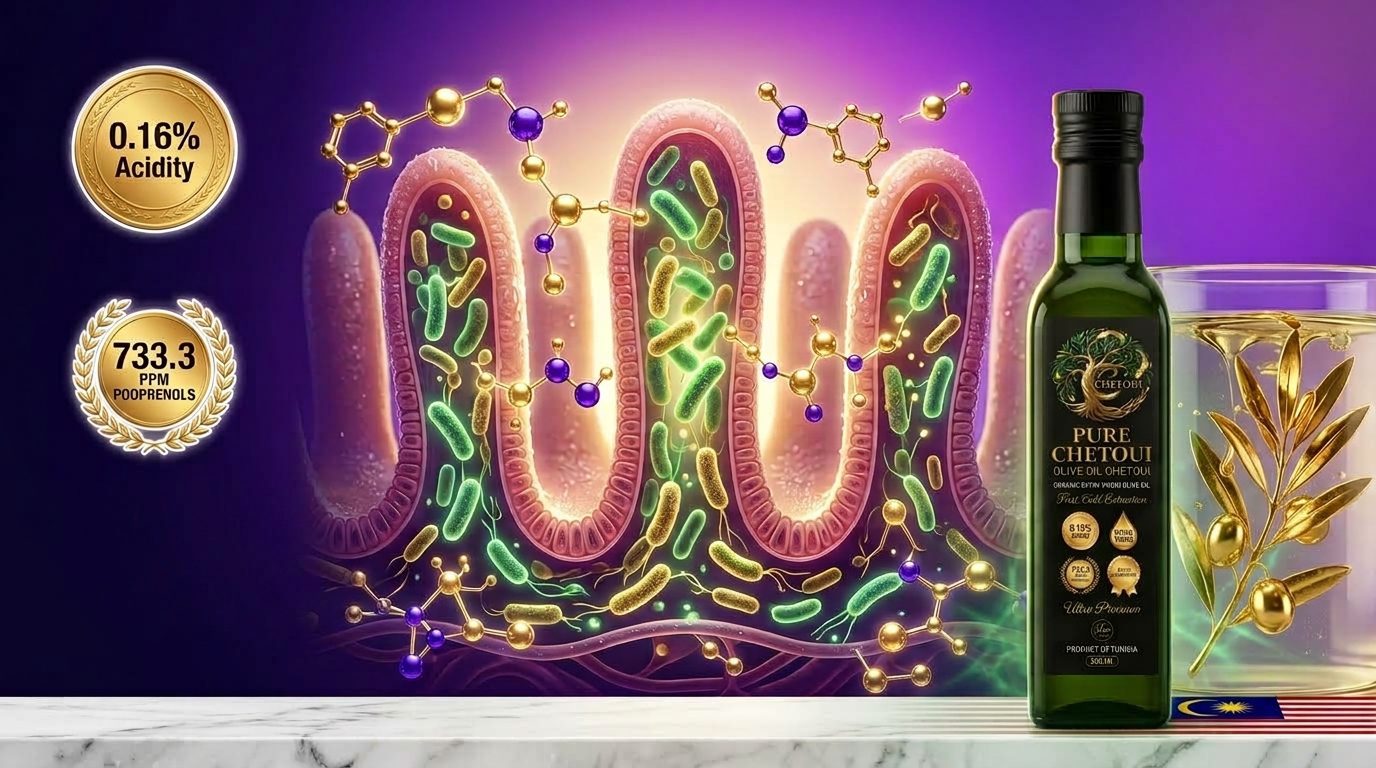
Olive oil for gut health is one of the most powerful yet overlooked natural remedies for digestive problems. Inside your gut, trillions of bacteria control everything from immunity and mood to nutrient absorption and inflammation. Modern research confirms that high-polyphenol extra virgin olive oil does not simply pass through your digestive system — it actively transforms it, feeding beneficial bacteria, calming inflammation, and repairing the intestinal lining from the inside out.
If you have been struggling with bloating, irregular bowel movements, acid reflux, or general digestive discomfort, what you are about to read could change how you think about gut healing forever. This guide reveals seven proven, science-backed ways olive oil supports your digestive health, the exact protocols that work, and why the type of olive oil you choose makes a dramatic difference in results.
Table of Contents
- How Olive Oil for Gut Health Actually Works (The Science)
- Way #1: Olive Oil Acts as a Natural Prebiotic
- Way #2: Oleocanthal Calms Gut Inflammation
- Way #3: The Gastric Shield — Protective Coating Effect
- Way #4: Repairs Leaky Gut (Intestinal Permeability)
- Way #5: Relieves Constipation Naturally
- Way #6: Rebalances the Olive Oil Microbiome Connection
- Way #7: Supercharges Nutrient Absorption
- Why Ultra-Low Acidity Matters for Olive Oil Digestive Health
- Polyphenol Concentration: The Dose That Matters
- How to Use Olive Oil for Gut Health (Daily Protocols)
- Olive Oil for Gut Health and Common Digestive Issues
- Olive Oil for Gut Health: Malaysian Context (Minyak Zaitun untuk Perut)
- Frequently Asked Questions
How Olive Oil for Gut Health Actually Works (The Science)
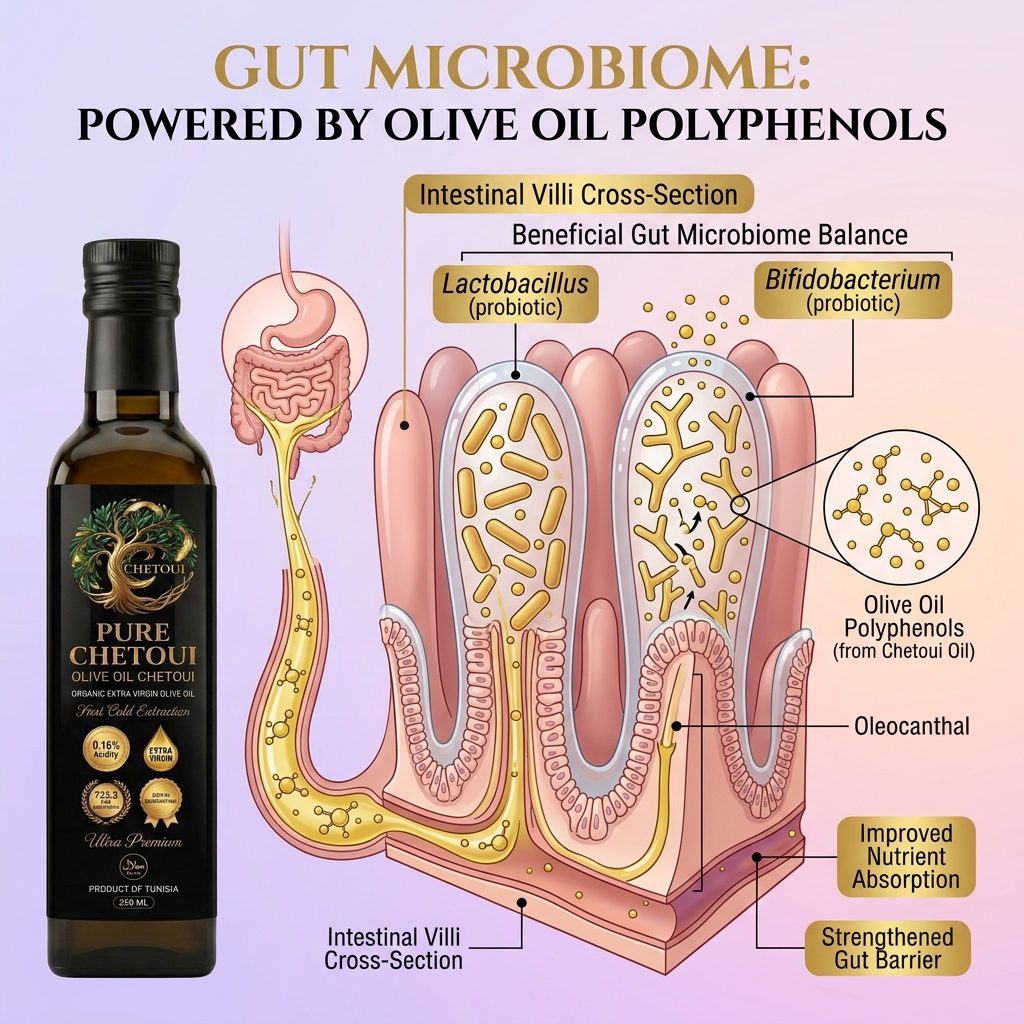
Before we dive into the seven proven ways, it helps to understand the basic mechanism. When you consume extra virgin olive oil, only 5–10% of its polyphenols are absorbed in the small intestine. The remaining 90–95% travels intact to your colon, where these compounds interact directly with your gut bacteria.
This is a crucial distinction. Unlike probiotics that introduce new bacteria, or fibre that feeds existing ones, olive oil polyphenols perform a dual role: they selectively nourish beneficial bacteria while simultaneously suppressing harmful strains. Research published in the Nutrients journal has documented this selective prebiotic action across multiple human trials.
The key bioactive compounds responsible for these olive oil digestive health benefits include:
- Hydroxytyrosol — a powerful antioxidant that protects intestinal cells from oxidative damage
- Oleocanthal — the natural anti-inflammatory that inhibits COX enzymes throughout the digestive tract
- Oleuropein — a polyphenol that selectively feeds Lactobacillus and Bifidobacterium strains
- Oleic acid — a monounsaturated fatty acid (65.24% in Pure Chetoui) that lubricates and protects the intestinal lining
Now let us explore each of the seven proven mechanisms in detail.
Way #1: Olive Oil Acts as a Natural Prebiotic for Your Gut
Most people associate prebiotics with fibre-rich foods like onions and garlic. But research now shows that olive oil polyphenols are among the most effective prebiotic compounds ever studied — and they work through an entirely different mechanism.
A landmark study published in Nutrients (2019) demonstrated that olive oil polyphenols — particularly hydroxytyrosol and oleuropein — selectively promote the growth of three critical bacterial strains:
- Lactobacillus — increases significantly with regular olive oil consumption, supporting immune function and vitamin synthesis
- Bifidobacterium — thrives on polyphenol metabolites, producing short-chain fatty acids that nourish colon cells
- Faecalibacterium prausnitzii — a key anti-inflammatory species that produces butyrate, the primary fuel source for colonocytes
Simultaneously, these polyphenols inhibit harmful bacteria like Clostridium difficile and pathogenic E. coli strains. This dual action — boosting beneficial bacteria while suppressing harmful ones — is what makes the olive oil microbiome connection so powerful compared to standard prebiotic supplements.
Critically, the prebiotic effect depends on polyphenol concentration. Standard supermarket olive oil at 80–150 ppm produces minimal microbiome impact. Research indicates you need at least 300 ppm for meaningful prebiotic effects — which is why high-polyphenol olive oil with 733.3 ppm biophenols delivers therapeutic doses in a single tablespoon.
Way #2: Oleocanthal Calms Gut Inflammation Naturally
Chronic gut inflammation sits at the root of nearly every digestive disorder — from irritable bowel syndrome (IBS) and inflammatory bowel disease (IBD) to leaky gut syndrome and food sensitivities. This is where oleocanthal, the natural anti-inflammatory compound in olive oil, becomes essential.
Oleocanthal works by inhibiting both COX-1 and COX-2 enzymes throughout the digestive tract. This mechanism is pharmacologically identical to ibuprofen — but without the gastric side effects that make NSAIDs harmful to the very gut lining they are meant to help.
A study published in the European Journal of Nutrition found that participants consuming high-polyphenol olive oil showed significant reductions in inflammatory markers within the gut lining compared to those consuming refined or low-polyphenol olive oil. The anti-inflammatory effect was dose-dependent, meaning higher polyphenol concentrations produced stronger results.
For anyone dealing with chronic digestive inflammation, this is a game-changer. Rather than masking symptoms with medications, olive oil for gut health addresses the underlying inflammatory cascade that drives most digestive complaints.

Way #3: The Gastric Shield — Olive Oil’s Protective Coating Effect
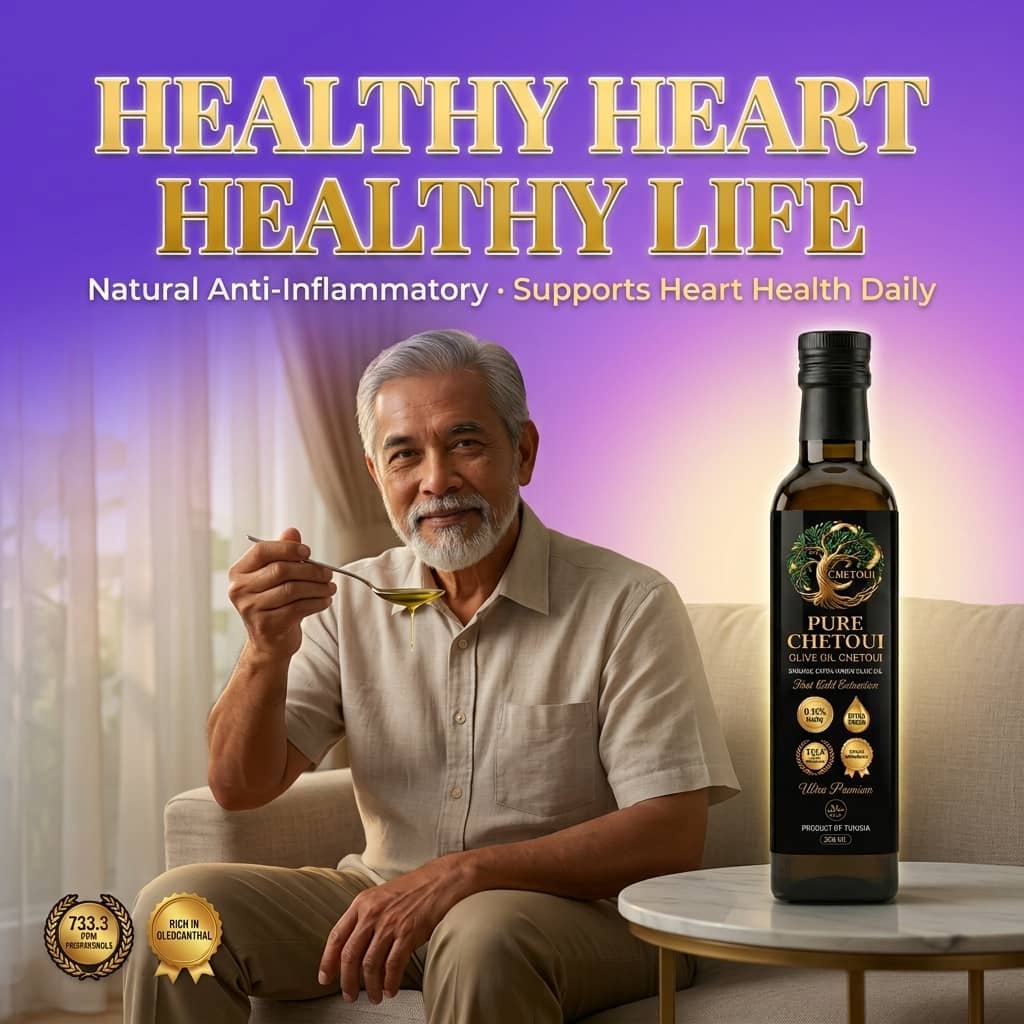
One of the most immediate benefits of taking olive oil for gut health is the gastric coating effect. When consumed on an empty stomach, olive oil creates a thin protective film over the stomach and intestinal lining, shielding it from acid, irritants, and mechanical damage.
This protective coating is particularly valuable for:
- People with gastritis or acid reflux (GERD) — the oil barrier reduces acid contact with inflamed tissue
- Anyone taking medications that irritate the stomach — including aspirin, NSAIDs, and certain antibiotics
- Those who experience morning nausea or empty-stomach discomfort — the coating provides immediate soothing relief
- People recovering from stomach ulcers — oleic acid supports mucosal lining repair
This is precisely why many naturopathic practitioners and functional medicine doctors recommend taking olive oil on an empty stomach — the protective coating effect is most pronounced before food dilutes it. The high oleic acid content of Pure Chetoui (65.24%) makes it exceptionally effective at forming this protective barrier.
Way #4: Olive Oil Repairs Leaky Gut (Intestinal Permeability)
Leaky gut syndrome — where gaps form between intestinal cells, allowing undigested food particles, toxins, and bacteria to enter the bloodstream — is increasingly recognized as a driver of autoimmune conditions, food sensitivities, and systemic inflammation.
Research published in Food & Function (2020) found that hydroxytyrosol, one of the primary polyphenols in extra virgin olive oil, specifically improved intestinal barrier integrity by strengthening tight junctions between intestinal epithelial cells. These tight junctions are the microscopic seals that prevent unwanted substances from leaking through the gut wall.
The study demonstrated that olive oil polyphenols upregulate the expression of tight junction proteins — including zonulin, occludin, and claudins — effectively sealing the gaps that cause intestinal permeability. This repair process is gradual, typically requiring 8–12 weeks of consistent daily consumption, but the results are measurable through reduced levels of zonulin in blood tests.
For anyone dealing with food sensitivities, unexplained fatigue, skin issues, or autoimmune flare-ups, addressing leaky gut with olive oil for gut health offers a natural, evidence-based approach to healing from the inside.
Way #5: Olive Oil Relieves Constipation Without Harsh Side Effects
Olive oil is one of the gentlest and most effective natural laxatives available. Unlike pharmaceutical laxatives that can cause cramping, dependency, and electrolyte imbalances, olive oil works through three natural mechanisms:
- Bile stimulation — oleic acid triggers bile production, which naturally stimulates intestinal contractions (peristalsis)
- Intestinal lubrication — the oil physically lubricates the intestinal walls, allowing stool to pass more easily
- Stool softening — the fats in olive oil mix with stool matter, reducing hardness and easing passage
The oleic acid content is the key factor here. Pure Chetoui’s oleic acid level of 65.24% makes it particularly effective at stimulating peristalsis. One tablespoon on an empty stomach in the morning is the standard protocol, and most people notice improved regularity within 1–3 days.
Importantly, olive oil does not create the dependency cycle associated with stimulant laxatives. Your body does not build tolerance, and the natural lubrication effect remains consistent with daily use.
Way #6: Olive Oil for Gut Health Rebalances Your Microbiome
The olive oil microbiome connection extends beyond simple prebiotic effects. Emerging research reveals that regular consumption of high-polyphenol olive oil produces a comprehensive microbiome remodelling effect that touches multiple dimensions of gut ecology.
Studies in the European Journal of Nutrition have documented three distinct microbiome changes from consistent olive oil consumption:
- Increased microbial diversity — a key marker of gut health, as diverse microbiomes are more resilient and functional
- Higher short-chain fatty acid (SCFA) production — butyrate, propionate, and acetate production increases, nourishing colon cells and regulating immune function
- Reduced pathogenic overgrowth — harmful bacteria and yeast (including Candida species) are suppressed without disrupting the broader ecosystem
This rebalancing effect is why olive oil digestive health benefits compound over time. The first few weeks primarily show symptomatic improvements — less bloating, better regularity. But the deeper microbiome restructuring occurs over 2–3 months of daily consumption, producing lasting improvements that persist even during brief breaks in usage.
The concentration of polyphenols is the critical variable. At 733.3 ppm biophenols, a single tablespoon of Pure Chetoui delivers the polyphenol load that research indicates is necessary for meaningful microbiome shifts — a dose that would require 3–4 tablespoons of standard supermarket olive oil to match.
Way #7: Olive Oil Supercharges Nutrient Absorption
A healthy gut is not just about comfort — it is about extracting maximum nutrition from the food you eat. Olive oil dramatically enhances the absorption of critical nutrients, effectively making every meal more nutritious.
The fat-soluble vitamins A, D, E, and K require dietary fat for absorption. Without adequate healthy fat at meals, these vitamins pass through unabsorbed — regardless of how many nutrient-rich foods you eat. Research shows that adding olive oil to meals increases carotenoid absorption from vegetables by up to 500%.
Practical applications for maximising nutrient absorption include:
- Drizzle on cooked vegetables — transforms the bioavailability of beta-carotene, lycopene, and lutein
- Add to rice or grain dishes — a tablespoon on warm nasi adds healthy fats and makes minerals more bioavailable
- Finish soups and stews — add just before serving to preserve polyphenols while enhancing nutrient uptake from the entire dish
- Pair with leafy greens — iron and calcium absorption from greens improves significantly with olive oil
This nutrient-enhancing effect makes olive oil for gut health doubly powerful: it heals the digestive system while simultaneously ensuring that system extracts more value from every bite of food.


Why Ultra-Low Acidity Matters for Olive Oil Digestive Health
Not all olive oils are equal when it comes to digestive comfort and therapeutic effect. The acidity level (free fatty acid content) directly determines how the oil interacts with your stomach lining — and this single factor explains why some people say “olive oil upsets my stomach.”
Here is how acidity levels compare for olive oil digestive health:
- High-acidity oil (0.5–0.8% FFA): Commonly found in blended or lower-grade olive oils. The elevated free fatty acids irritate the gastric lining, causing nausea, reflux, or stomach discomfort — especially when taken on an empty stomach.
- Medium-acidity oil (0.3–0.5% FFA): The standard for most commercial extra virgin olive oils. Generally well-tolerated but may still cause mild discomfort in people with sensitive stomachs or existing gastric conditions.
- Ultra-low acidity oil (below 0.2% FFA): The premium category — gentle enough for even the most sensitive digestive systems. Pure Chetoui measures just 0.16% FFA, placing it firmly in this elite range.
The difference is not subtle. Many people who have abandoned olive oil due to stomach discomfort were actually reacting to high-acidity, low-quality oils. Switching to an ultra-low acidity EVOO like Pure Chetoui (0.16% FFA, verified through independent laboratory acidity testing) often resolves digestive intolerance completely.
Polyphenol Concentration: The Proven Dose That Transforms Digestion
Here is the critical point that most articles on olive oil for gut health miss entirely: polyphenol concentration determines whether you receive therapeutic benefits or merely consume expensive cooking fat.
Research consistently shows that meaningful prebiotic, anti-inflammatory, and gut-healing effects require a minimum threshold of approximately 300 ppm total polyphenols per daily serving. Below that threshold, the dose simply is not large enough to shift microbial populations or suppress inflammatory pathways.
Let us compare the practical implications:
- Standard supermarket EVOO (80–150 ppm): Minimal prebiotic effect. You would need 3–4 tablespoons daily to approach a therapeutic dose — adding 360–480 calories per day, which is counterproductive for most people.
- Good quality EVOO (300–500 ppm): Moderate therapeutic effect achievable with 1–2 tablespoons daily. Noticeable digestive improvements over 4–6 weeks.
- High-polyphenol EVOO like Pure Chetoui (733.3 ppm): Full therapeutic dose delivered in a single tablespoon (15ml, ~120 calories). Maximum prebiotic, anti-inflammatory, and gut-healing benefit with minimal caloric impact.
Pure Chetoui’s complete chemical profile supports this therapeutic advantage: 733.3 ppm biophenols, 0.16% free fatty acid, peroxide value of 6.09 meq O2/kg, and 65.24% oleic acid. These numbers reflect an oil harvested at peak potency from Chetoui cultivar olives in Northern Tunisia — and the quality is externally validated by the NYIOOC, where the producer has earned 82 awards.
How to Use Olive Oil for Gut Health: Proven Daily Protocols
Protocol 1: The Morning Tablespoon (Best for Gut Healing)
The most effective method for maximising olive oil digestive health benefits:
- Take 1 tablespoon (15ml) of high-polyphenol EVOO on a completely empty stomach upon waking
- Wait 15–30 minutes before eating breakfast — this allows the gastric coating to form fully
- Optionally follow with a glass of warm water with lemon to enhance bile stimulation
- Maintain daily consistency — the cumulative benefits build over 4–12 weeks
This protocol is recommended by many functional medicine practitioners and is the approach used in most clinical studies on olive oil on an empty stomach. The peppery throat sensation you may feel is oleocanthal — it confirms the oil is genuinely high in polyphenols.
Protocol 2: With Meals (Best for Nutrient Absorption)
Adding olive oil to meals enhances fat-soluble vitamin and mineral absorption throughout the day:
- Breakfast: Drizzle on eggs, avocado toast, or oatmeal for morning polyphenol delivery
- Lunch: Add a tablespoon to rice, noodles, or grain bowls — works perfectly with Malaysian and Southeast Asian cuisine
- Dinner: Finish cooked dishes with a raw drizzle just before serving to preserve heat-sensitive polyphenols
Protocol 3: Combined Approach (Most Comprehensive)
For maximum olive oil digestive health benefits, combine both protocols: one tablespoon on an empty stomach in the morning for direct gut healing, plus moderate use as a finishing oil at meals for enhanced nutrient absorption throughout the day.
Timeline of Proven Benefits
- Day 1–3: Improved bowel regularity, particularly for those experiencing constipation
- Week 1–2: Reduced bloating, improved digestion comfort, less post-meal heaviness
- Week 3–4: Measurable changes in gut microbiome composition (documented in research studies)
- Month 2–3: Sustained improvement in inflammatory markers, intestinal barrier integrity, and overall digestive function
- Month 3+: Deeper microbiome remodelling with lasting resilience and reduced sensitivity to dietary triggers
Olive Oil for Gut Health and Common Digestive Issues
Bloating and Gas
Chronic bloating typically signals gut microbiome imbalance — an overgrowth of gas-producing bacteria at the expense of beneficial strains. By feeding beneficial bacteria while suppressing harmful gas-producing strains, regular olive oil consumption can meaningfully reduce bloating within 2–4 weeks. Many Malaysian customers report noticeably less bloating within the first week of daily use.
Acid Reflux and GERD
The gastric coating effect of olive oil provides direct relief for acid reflux sufferers. The protective film reduces acid contact with the oesophageal and gastric lining, while oleocanthal’s anti-inflammatory action calms existing irritation. Ultra-low acidity is essential here — high-acidity oils can actually worsen reflux symptoms.
Gastric Sensitivity and Irritation
For those with sensitive stomachs — common in Malaysia where spicy food, teh tarik, and irregular meal timing can stress the digestive system — ultra-low acidity olive oil provides a protective buffer. The anti-inflammatory oleocanthal calms irritation while oleic acid supports mucosal lining repair. Minyak zaitun untuk perut yang sensitif (olive oil for sensitive stomachs) works best at the ultra-low acidity level of 0.16%.
IBS (Irritable Bowel Syndrome)
Many IBS sufferers report significant improvement with daily high-polyphenol olive oil. The combined prebiotic, anti-inflammatory, and gut-coating effects address multiple IBS mechanisms simultaneously. For IBS patients, starting with half a tablespoon and increasing gradually over a week minimises the risk of initial adjustment symptoms.
Incorporating olive oil into a keto or low-carb dietary approach can further support digestive health by reducing inflammatory carbohydrate intake while increasing the proportion of beneficial oleic acid and polyphenols in the diet.
Olive Oil for Gut Health: Malaysian Context (Minyak Zaitun untuk Perut)
Malaysian diets present specific gut health challenges that make olive oil for gut health especially relevant for this market. Understanding these challenges explains why minyak zaitun untuk perut (olive oil for the stomach) has become increasingly popular across Malaysia.
- High refined oil intake: Palm oil and vegetable oils dominate Malaysian cooking but provide zero polyphenols and zero prebiotic benefit. They fill caloric requirements without supporting the microbiome.
- Spicy food stress: While capsaicin has documented health benefits, daily consumption of sambal, curry, and chilli-heavy dishes can chronically irritate sensitive gut linings — olive oil provides a protective counterbalance.
- Irregular meal timing: Common in Malaysia’s busy urban lifestyle, eating at inconsistent times disrupts circadian rhythms of gut bacteria — olive oil polyphenols help stabilise microbiome populations regardless of meal timing.
- Antibiotic overuse: Broad-spectrum antibiotic prescriptions decimate beneficial gut bacteria that olive oil polyphenols can help rebuild and restore.
- High sugar consumption: Sweetened drinks and condensed milk feed harmful gut bacteria — olive oil polyphenols counteract this by selectively suppressing sugar-feeding pathogenic strains.
The beauty of using olive oil for gut health is that it requires no complete dietary overhaul. Adding one tablespoon of high-polyphenol EVOO daily works alongside your existing diet — not as a replacement. It integrates seamlessly into Malaysian cuisine when used as a finishing oil on rice, noodles, soups, and vegetable dishes.
Ready to support your gut health naturally? Try Pure Chetoui — 733.3 ppm biophenols, 0.16% ultra-low acidity, NYIOOC-awarded quality (82 awards), and free shipping across Malaysia at RM 109 for 250ml. One bottle lasts approximately 17 days of therapeutic daily use.
Frequently Asked Questions About Olive Oil for Gut Health
Can olive oil help with IBS symptoms?
Yes — many IBS sufferers report meaningful improvement with daily high-polyphenol olive oil. The combined anti-inflammatory (oleocanthal), prebiotic (polyphenols), and gut-coating (oleic acid) effects address multiple IBS mechanisms simultaneously. Clinical observations suggest improvements in bloating, pain, and regularity within 2–4 weeks. Start with half a tablespoon and increase gradually if you have sensitive digestion to minimise initial adjustment symptoms.
Should I take olive oil before or after meals for gut health?
Both approaches offer distinct benefits for olive oil digestive health. Taking it on an empty stomach provides the most direct gut-coating and prebiotic benefit because polyphenols reach the colon undiluted. Taking it with meals maximises nutrient absorption from your food. The ideal protocol combines both: one tablespoon on an empty stomach each morning, plus drizzling on meals throughout the day.
How long does olive oil take to improve gut health?
Constipation relief can be noticed within 1–3 days. Bloating improvement typically takes 1–2 weeks. Measurable microbiome composition shifts occur within 3–4 weeks of daily consumption, according to research published in Nutrients. For chronic gut issues like leaky gut or long-standing IBS, allow 8–12 weeks of consistent daily use to experience the deeper gut-healing effects.
Can children take olive oil for digestive issues?
Olive oil is safe for children from approximately 6 months of age (consult your paediatrician for your specific child). For children over 1 year, half a teaspoon mixed into food is a gentle way to support digestive health and nutrient absorption. The ultra-low acidity of Pure Chetoui (0.16% FFA) makes it particularly gentle for developing digestive systems and is well-tolerated even by children with sensitive stomachs.
Does olive oil quality really matter for gut health benefits?
Quality is the single most important variable. The gut health benefits of olive oil are driven almost entirely by polyphenol content, which varies by more than 900% between the lowest and highest quality oils. A standard supermarket EVOO at 80–100 ppm provides negligible prebiotic effect. Research shows you need 300+ ppm for meaningful microbiome impact. Pure Chetoui at 733.3 ppm delivers a full therapeutic dose in one tablespoon — something that would require 4–5 tablespoons of ordinary olive oil.
Is olive oil safe for people with gallbladder issues?
Olive oil stimulates bile production, which is generally beneficial for digestion but may cause discomfort in people with gallstones or active gallbladder disease. If you have been diagnosed with gallbladder issues, start with a very small amount (half a teaspoon) and consult your gastroenterologist before increasing the dose. For people without gallbladder issues, the bile-stimulating effect of olive oil is one of its key digestive health benefits.

Related posts
Keto Diet Olive Oil — The Essential Fat for Ketosis

Keto diet olive oil is the single most powerful fat you can add to a ketogenic eating plan — and the science backs this up without question.
Olive Oil on Empty Stomach Benefits
Olive oil on empty stomach benefits have been trusted across Mediterranean cultures for centuries, and modern clinical research now confirms what those traditions always suggested.
Best Olive Oil for Cooking Malaysia
Finding the best olive oil for cooking Malaysia can feel overwhelming. Walk through any Malaysian supermarket and you face shelves lined with bottles ranging from RM 15 to RM 150, each claiming to be pure, healthy, or premium.
What Makes High Polyphenol Olive Oil Different?
What Are Polyphenols and Why Do They Matter?
1. Powerful Anti-Inflammatory Protection
2. Heart and Cardiovascular...