
Table of Contents
- Why Choosing the Best Olive Oil for Cooking Malaysia Matters
- Understanding Olive Oil Grades Available in Malaysia
- Can You Really Cook with Extra Virgin Olive Oil?
- Olive Oil Cooking Temperature: What Malaysian Home Cooks Must Know
- Best Olive Oil for Cooking Malaysia: 7 Criteria That Matter
- Masak Dengan Minyak Zaitun: How Malaysian Families Use Olive Oil Daily
- Pure Chetoui Lab Data and Chemical Analysis
- Common Mistakes When Cooking with Olive Oil in Malaysia
- Minyak Zaitun Untuk Masak: Storage Tips for Malaysia’s Climate
- Frequently Asked Questions
Finding the best olive oil for cooking Malaysia can feel overwhelming. Walk through any Malaysian supermarket and you face shelves lined with bottles ranging from RM 15 to RM 150, each claiming to be pure, healthy, or premium. The truth is, most of those bottles contain refined olive oil stripped of the very compounds that make olive oil worth buying. This guide cuts through the noise with science-backed data, lab-tested numbers, and practical advice tailored specifically for Malaysian kitchens — so you can choose an olive oil that handles heat, preserves health benefits, and genuinely improves your cooking.
Whether you are a home cook searching for a healthier alternative to palm oil, a health-conscious parent wanting the best for your family, or someone exploring the keto diet with olive oil, this comprehensive guide will help you make a confident, informed decision about the best olive oil for cooking Malaysia households deserve.

Why Choosing the Best Olive Oil for Cooking Malaysia Matters
Malaysia imports approximately 30,000 metric tonnes of olive oil annually, yet consumer understanding of quality remains low. Most Malaysians buy based on price or brand recognition without knowing the single most important factor: polyphenol content.
Polyphenols are bioactive compounds naturally present in olives. They determine three critical things about your olive oil:
- Heat stability — higher polyphenols protect the oil from oxidative breakdown during cooking
- Health benefits — polyphenols like oleocanthal provide anti-inflammatory protection comparable to ibuprofen
- Shelf life — polyphenols act as natural preservatives, keeping the oil fresh longer in Malaysia’s tropical humidity
A cheap, refined olive oil with zero polyphenols gives you calories and fat — nothing more. A high-polyphenol olive oil gives you a functional food that actively supports heart health, reduces inflammation, and remains stable when you cook with it. That difference matters, especially when you are spending money on imported oil.
Understanding Olive Oil Grades Available in Malaysia
Before identifying the best olive oil for cooking Malaysia kitchens need, you must understand the four grades available on the market. The International Olive Council (IOC) defines these classifications based on extraction method, chemical composition, and sensory quality.
Extra Virgin Olive Oil (EVOO)
The highest grade of olive oil. Extracted mechanically through cold pressing with no chemical solvents. By IOC standards, extra virgin must have free fatty acid (FFA) levels below 0.8% and pass a sensory evaluation for fruitiness with zero defects. Premium EVOO from quality producers achieves FFA far below that threshold — for example, Pure Chetoui tests at just 0.16% FFA, five times lower than the maximum allowed.
EVOO retains the full spectrum of polyphenols, tocopherols, and flavour compounds. It is the only grade that delivers meaningful health benefits. The olive oil cooking temperature it can handle is higher than most people expect, with smoke points typically between 190°C and 215°C depending on polyphenol content and acidity.
Virgin Olive Oil
Also mechanically extracted, but with slightly higher acidity (up to 2.0%) and minor sensory defects permitted. It contains fewer polyphenols than extra virgin. While acceptable for cooking, you get less health benefit per ringgit and less heat stability. This grade is uncommon on Malaysian shelves since most importers stock either EVOO or refined blends.
“Pure” or “Classic” Olive Oil
Despite the reassuring name, this is a blend of refined olive oil and a small percentage of virgin olive oil added for colour and minimal flavour. The refining process strips out nearly all polyphenols and antioxidants. While the smoke point increases to approximately 240°C, you lose the health properties that make olive oil worth choosing over cheaper cooking oils. Most budget bottles on Malaysian shelves — those priced between RM 15 and RM 30 — fall into this category.
Olive Pomace Oil
The lowest commercial grade. Extracted from leftover olive pulp using chemical solvents such as hexane, then refined and blended with a fraction of virgin oil. Pomace oil is nutritionally similar to any generic vegetable oil. Some studies have raised concerns about polycyclic aromatic hydrocarbon (PAH) contamination in poorly processed pomace oils. Avoid this grade entirely. Learning how to distinguish genuine olive oil from fake or adulterated products is essential before buying.
Can You Really Cook with Extra Virgin Olive Oil?
Yes — and this is perhaps the most persistent cooking myth in Malaysia that needs correcting.
The outdated advice that EVOO “cannot handle heat” or “turns toxic when heated” has been thoroughly debunked by peer-reviewed research. A landmark 2018 study published in Acta Scientific Nutritional Health by Dr. Simon Poole and the Modern Olives Laboratory in Australia tested ten common cooking oils under heat and found that extra virgin olive oil was the most chemically stable cooking oil, producing the lowest levels of harmful polar compounds and trans fats — outperforming canola oil, sunflower oil, coconut oil, rice bran oil, grapeseed oil, and even avocado oil.
Why is EVOO so stable? Because polyphenols function as powerful natural antioxidants that resist oxidative degradation during heating. The higher the polyphenol count, the more stable the oil remains under thermal stress. This is why the best olive oil for cooking Malaysia families should choose is one with verified, high polyphenol levels — not simply the cheapest extra virgin label available.
Pure Chetoui, with its laboratory-verified 733.3 ppm biophenol content, is classified as a high-polyphenol EVOO. Its polyphenol count is more than double the 250 ppm minimum required for the EU health claim on olive oil polyphenols. This concentration of natural antioxidants directly translates to superior cooking performance and heat resistance in your Malaysian kitchen.
Olive Oil Cooking Temperature: What Malaysian Home Cooks Must Know
Understanding olive oil cooking temperature is essential for getting the best results from your oil. The smoke point — the temperature at which oil begins to produce visible smoke and starts breaking down — varies significantly between olive oil grades and individual products.
Pure Chetoui EVOO has a verified smoke point of 193°C (379°F). Here is how that compares to common Malaysian cooking methods:
| Cooking Method | Typical Temperature | Suitable for EVOO? |
|---|---|---|
| Tumis / Sautéing | 120°C – 170°C | Yes — well within range |
| Pan-frying (telur mata, ikan) | 150°C – 180°C | Yes — comfortable margin |
| Baking (kuih, bread, cakes) | 160°C – 190°C | Yes — at or below smoke point |
| Roasting vegetables | 180°C – 200°C | Yes — brief exposure above smoke point is acceptable |
| Stir-frying (high heat wok) | 200°C – 230°C | No — use refined oil for extreme wok heat |
| Deep frying (goreng) | 170°C – 190°C | Technically yes, but not cost-effective |
The key takeaway on olive oil cooking temperature: the vast majority of Malaysian home cooking — tumis, pan-frying, baking, and roasting — happens well within the safe range of a quality EVOO. You do not need to reserve extra virgin olive oil only for salads and drizzling, although those raw applications do deliver the maximum flavour and health benefit.
For extreme high-heat techniques like aggressive wok stir-frying above 230°C, a refined cooking oil may be more practical. But for everyday Malaysian cooking, the best olive oil for cooking Malaysia homes can rely on is a high-polyphenol EVOO that stays stable across normal kitchen temperatures.

Best Olive Oil for Cooking Malaysia: 7 Criteria That Matter
After extensive research, laboratory analysis, and consultation with olive oil experts, these are the seven criteria Malaysian consumers should evaluate when choosing the best olive oil for cooking Malaysia kitchens need:
1. Polyphenol Count Above 300 ppm
This is the single most important number. Polyphenols determine heat stability, health benefits, and shelf life. The EU requires a minimum of 250 ppm to make health claims. For Malaysian conditions — tropical heat, humidity, and longer storage times — aim for 300 ppm or higher. Premium oils reach 500-800+ ppm. Pure Chetoui is verified at 733.3 ppm, placing it in the top tier globally.
2. Free Fatty Acid (FFA) Below 0.3%
Lower FFA indicates fresher olives and better processing. The IOC allows up to 0.8% for extra virgin, but elite producers achieve well under 0.3%. Pure Chetoui measures 0.16% FFA — indicating olives processed within hours of harvest. You can learn more about why this matters in our guide on extra virgin olive oil acidity testing.
3. Low Peroxide Value
Peroxide value measures initial oxidation. The IOC maximum for EVOO is 20 meq O₂/kg. Lower is better, indicating the oil has not begun degrading. Pure Chetoui measures 6.09 meq O₂/kg, well under the maximum and indicating excellent freshness and minimal oxidation from harvest to bottle.
4. Single Origin
Avoid blends from multiple unnamed countries. Single-origin oils offer traceability, consistency, and accountability. Pure Chetoui comes from Northern Tunisia, produced exclusively from the Chetoui cultivar — a variety renowned for its exceptionally high polyphenol content. The olives are harvested in early November 2025 and cold-extracted within 4 hours of picking to preserve maximum freshness.
5. High Oleic Acid Content
Oleic acid (a monounsaturated omega-9 fatty acid) is the primary health-promoting fat in olive oil. Higher oleic acid content correlates with greater cardiovascular benefits. Pure Chetoui contains 65.24% oleic acid, within the ideal range for extra virgin olive oil.
6. Competition Awards and Third-Party Validation
International competitions provide independent quality verification. The NYIOOC World Olive Oil Competition is the most prestigious. Pure Chetoui’s producer holds an impressive record of 82 NYIOOC awards — 46 Gold and 36 Silver, confirming consistent, world-class quality year after year.
7. Dark Glass Bottle and Proper Packaging
Light and heat are olive oil’s greatest enemies. In Malaysia’s tropical climate, UV exposure degrades polyphenols rapidly. Always choose olive oil in dark glass bottles, never clear plastic. Proper packaging protects your investment and ensures the oil you pour is as good as the oil that was bottled.
Masak Dengan Minyak Zaitun: How Malaysian Families Use Olive Oil Daily
Masak dengan minyak zaitun (cooking with olive oil) is becoming increasingly popular among Malaysian families who prioritise health without sacrificing flavour. Here is how Malaysian households integrate the best olive oil for cooking Malaysia mealtimes into their daily routine:
Morning Wellness Routine
- 1 tablespoon on an empty stomach — supports gut health, aids digestion, and provides sustained energy. Many Malaysians follow this traditional Mediterranean practice for its anti-inflammatory benefits.
- Drizzled on roti canai or roti bakar with honey — a healthy breakfast upgrade that replaces margarine or butter with heart-healthy monounsaturated fats.
- Blended into smoothies or overnight oats — adds healthy fats without altering the taste, improving nutrient absorption of fat-soluble vitamins (A, D, E, K).
Lunch and Dinner Cooking
- Tumis bawang putih dan bawang merah — sautéing garlic and shallots in olive oil creates a flavourful base for countless Malaysian dishes including nasi goreng, mee goreng, and vegetable stir-fries.
- Drizzled on steamed rice (nasi) — a tablespoon of EVOO on hot rice enhances flavour and makes fat-soluble nutrients more bioavailable.
- Finishing oil on soups (sup tulang, sup sayur) — adding a tablespoon just before serving preserves polyphenols fully since the oil is not heated.
- Salad dressing — mix EVOO with lemon juice, salt, and a touch of honey for a simple, clean dressing.
- Marinating ayam panggang or ikan bakar — olive oil-based marinades keep protein moist and add a subtle Mediterranean depth to traditional Malaysian grilled dishes.
For Children (6 Months and Older)
- Half teaspoon mixed into bubur (porridge) — paediatrician-recommended from 6 months for brain development and healthy fat intake.
- On pasta, noodles, or steamed vegetables — gentle, mild bitterness that children adapt to easily, building healthy eating habits early.
Masak dengan minyak zaitun does not mean abandoning Malaysian flavours. It means upgrading the oil you already use for everyday cooking to one that actively supports your family’s health.
Pure Chetoui Lab Data and Chemical Analysis
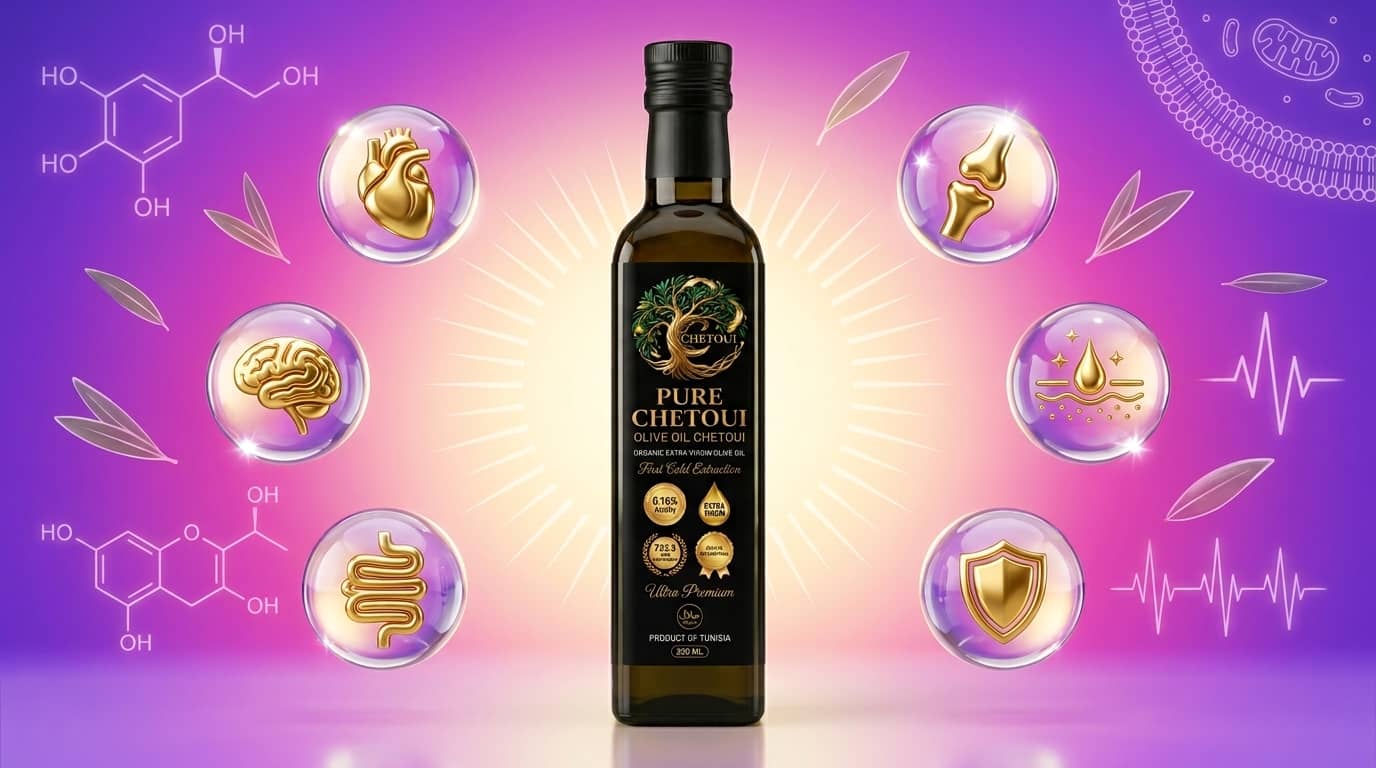
Transparency matters when selecting the best olive oil for cooking Malaysia consumers can trust. Here are the verified laboratory results for Pure Chetoui Extra Virgin Olive Oil:
| Parameter | Pure Chetoui Result | IOC EVOO Standard | Rating |
|---|---|---|---|
| Biophenols (Polyphenols) | 733.3 ppm | No minimum (250 ppm for EU health claim) | Exceptional |
| Free Fatty Acid (FFA) | 0.16% | ≤ 0.8% | Exceptional |
| Peroxide Value | 6.09 meq O₂/kg | ≤ 20 meq O₂/kg | Excellent |
| Oleic Acid | 65.24% | 55% – 83% | Optimal |
| Smoke Point | 193°C (379°F) | Not specified | Suitable for most cooking |
Product details:
- Origin: Northern Tunisia
- Cultivar: Chetoui (known for exceptionally high polyphenol content)
- Harvest: Early November 2025, cold extraction within 4 hours of picking
- Awards: NYIOOC 82 awards total — 46 Gold, 36 Silver
- Price: RM 109 per 250ml bottle
- Available at: minyakzaitun.my/product/pure-chetoui/
Every number above is verifiable. Unlike many olive oils on Malaysian shelves that provide no lab data whatsoever, Pure Chetoui publishes its full chemical analysis because the numbers speak for themselves. When choosing the best olive oil for cooking Malaysia families can depend on, verified data always beats marketing claims.

Common Mistakes When Cooking with Olive Oil in Malaysia
Even well-intentioned home cooks make errors that waste money or reduce the benefits of their olive oil. Avoid these common pitfalls:
Mistake 1: Buying “Light” Olive Oil Thinking It Is Healthier
“Light” olive oil refers to light flavour, not lower calories. It is refined olive oil with virtually zero polyphenols, antioxidants, or health benefits. You are paying premium olive oil prices for nutritionally empty oil. Always choose extra virgin.
Mistake 2: Storing Olive Oil Next to the Stove or Near Windows
Heat and light degrade olive oil faster than anything else. In Malaysia’s tropical climate, this is especially critical. Store your bottle in a dark, cool cupboard — away from the stove, windows, and direct sunlight. This simple habit can extend the usable life of your oil by months.
Mistake 3: Using Premium EVOO for Deep Frying
While high-polyphenol EVOO technically can withstand deep-frying temperatures, it is not cost-effective. Reserve your premium minyak zaitun untuk masak applications where you taste and benefit from the polyphenols: sautéing, finishing, drizzling, and low-to-medium heat cooking. For deep frying, a standard cooking oil works fine.
Mistake 4: Keeping an Opened Bottle for Too Long
Once opened, olive oil begins oxidising. Use an opened bottle within 4 to 6 months for maximum benefit. Polyphenols, flavour, and aroma all degrade with extended oxygen exposure. The 250ml bottle size is ideal for Malaysian households — small enough to use before quality declines, large enough for several weeks of daily cooking.
Mistake 5: Judging Quality by Colour Alone
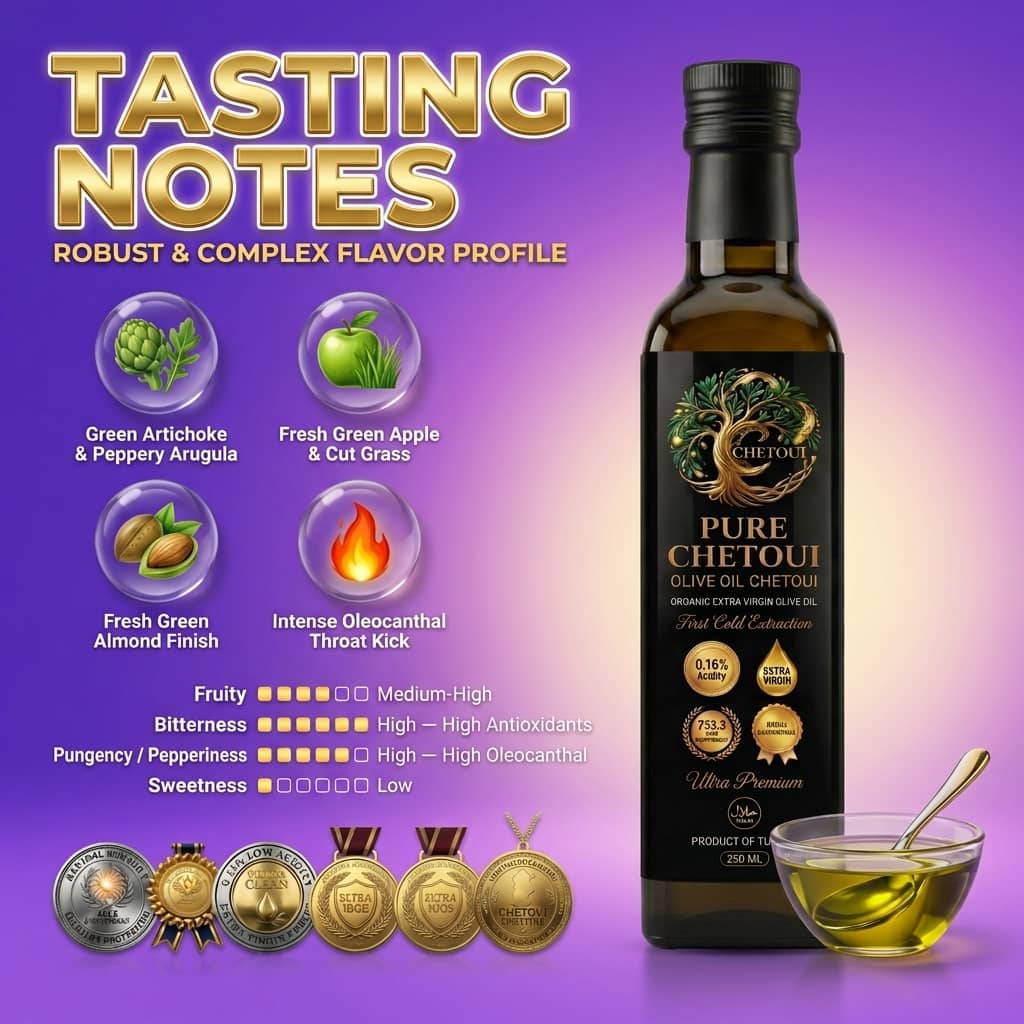
Green does not automatically mean better. Olive oil colour varies naturally based on cultivar, harvest timing, and chlorophyll content. Professional tasters use dark blue glasses to eliminate colour bias. Judge by aroma (fresh, grassy, peppery), taste (complex bitterness and pungency), and most importantly, lab data.
Minyak Zaitun Untuk Masak: Storage Tips for Malaysia’s Tropical Climate
Minyak zaitun untuk masak (olive oil for cooking) requires proper storage, particularly in Malaysia where ambient temperatures regularly exceed 30°C and humidity stays above 70%. Follow these guidelines to protect your investment:
- Temperature: Store between 14°C and 24°C. A dark kitchen cupboard away from heat sources is ideal. If your kitchen runs very hot, consider storing the bottle in a cool section of the pantry.
- Light exposure: UV radiation breaks down polyphenols rapidly. Dark glass bottles provide protection, but still avoid leaving the bottle on the countertop or near windows. Malaysian sunlight is intense year-round.
- Seal tightly: Oxygen accelerates oxidation. Always replace the cap immediately after pouring. Consider a pour spout with a built-in seal for daily-use bottles.
- Never refrigerate: Refrigeration causes olive oil to solidify and form condensation when returning to room temperature. This does not damage the oil but is unnecessary and inconvenient. Room temperature storage in a dark place is sufficient.
- Check harvest date: The best olive oil for cooking Malaysia consumers buy should always display a harvest date (not just a “best before” date). Use within 18 to 24 months of harvest for optimal quality, and within 6 months of opening.
Proper storage of minyak zaitun untuk masak ensures that every ringgit you spend delivers the full polyphenol content and flavour the oil was bottled with. Poor storage is the fastest way to turn a premium EVOO into an expensive, ordinary oil.
Frequently Asked Questions About the Best Olive Oil for Cooking Malaysia
Is it wasteful to cook with expensive extra virgin olive oil?
No — when you use it strategically. Use premium high-polyphenol EVOO for applications where you taste and benefit from its compounds: morning tablespoon, salad dressing, finishing drizzle, and sautéing. The polyphenols that make it expensive also make it more heat-stable than cheaper oils, so you are not “destroying” the good compounds at normal cooking temperatures. Research confirms that EVOO retains significant polyphenol content even after moderate cooking. For extreme high-heat methods like deep frying, a standard oil is more cost-effective.
Can olive oil replace coconut oil and palm oil in Malaysian cooking?
For the majority of Malaysian dishes, yes. Olive oil works exceptionally well for tumis (sautéing), making base pastes (rempah), pan-frying eggs and fish, and general everyday cooking. The only exceptions are dishes where coconut flavour is structurally essential — nasi lemak, rendang, and certain kuih — where santan or coconut oil is irreplaceable. For all other cooking, olive oil is a nutritionally superior alternative to palm oil, offering monounsaturated fats and polyphenols that palm oil lacks.
Does the best olive oil for cooking Malaysia need to be the most expensive one?
Not necessarily the most expensive, but the cheapest options are almost guaranteed to be refined and nutritionally empty. Look for the best value per polyphenol — an oil that delivers verified high polyphenol content at a fair price. Pure Chetoui at RM 109 per 250ml delivers 733.3 ppm biophenols, which translates to exceptional value per milligram of health-active polyphenols compared to supermarket brands that may contain near-zero polyphenols regardless of their “extra virgin” label.
How much olive oil should a Malaysian family use per month?
For a family of four using olive oil daily (1 tablespoon per adult for direct consumption, plus cooking use), expect to use approximately 500ml to 750ml per month. The Mediterranean diet recommends 3 to 4 tablespoons per person per day across all uses. Start with one 250ml bottle and adjust based on your family’s consumption pattern.
Is olive oil safe for babies and young children?
Yes. Paediatricians recommend introducing olive oil from 6 months of age, starting with half a teaspoon mixed into porridge or pureed foods. Olive oil provides essential fatty acids for brain development and helps with the absorption of fat-soluble vitamins. Choose only extra virgin olive oil (never refined or pomace) for infant use, as EVOO has the cleanest composition and lowest chemical residue risk.
How do I know if my olive oil is genuine or adulterated?
Look for three things: a specific harvest date printed on the label (not just “best before”), a named single origin (country and ideally region), and third-party laboratory analysis showing FFA, peroxide value, and polyphenol content. If the oil provides none of these, you cannot verify its authenticity. Brands that invest in competition entries (like NYIOOC awards) and publish lab data are inherently more trustworthy. Read our detailed guide on how to identify genuine vs fake olive oil (minyak zaitun asli vs palsu) for a complete checklist.
What is the difference between olive oil cooking temperature and smoke point?
The smoke point is the specific temperature at which oil begins producing visible smoke, indicating the start of thermal degradation. Olive oil cooking temperature refers to the practical range at which olive oil performs safely and effectively — which can include brief exposure slightly above the smoke point without harmful effects. Research shows that even at temperatures near the smoke point, high-polyphenol EVOO produces fewer harmful compounds than refined oils heated to their own smoke points. For everyday Malaysian cooking, maintaining oil temperature below 190°C ensures maximum safety and nutrition retention.
Where can I buy the best olive oil for cooking Malaysia delivery?
Pure Chetoui Extra Virgin Olive Oil is available at minyakzaitun.my with free shipping across Malaysia. Each bottle comes from a single harvest, includes full lab analysis, and arrives in protective dark glass packaging. For the best value, consider the bundle options that reduce the per-bottle cost while ensuring you always have fresh supply on hand.

Related posts
Olive Oil Gift Set Malaysia — The Ultimate Guide

Olive oil gift set Malaysia — if you are searching for a meaningful, health-conscious gift that stands out from generic hampers and forgettable cookie boxes, premium extra virgin olive oil is the answer.
Keto Diet Olive Oil — The Essential Fat for Ketosis
Keto diet olive oil is the single most powerful fat you can add to a ketogenic eating plan — and the science backs this up without question.
Olive Oil on Empty Stomach Benefits
Olive oil on empty stomach benefits have been trusted across Mediterranean cultures for centuries, and modern clinical research now confirms what those traditions always suggested.
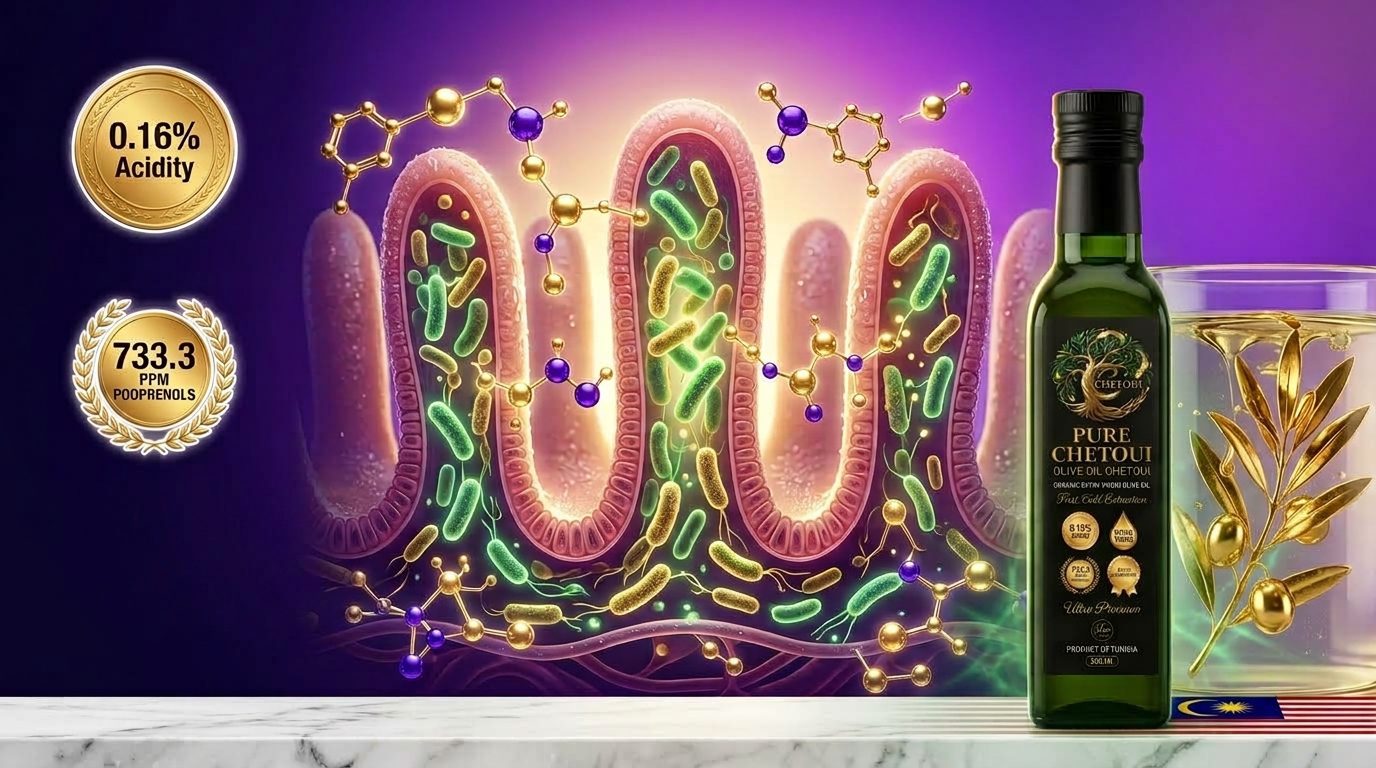
Olive Oil for Gut Health
Olive oil for gut health is one of the most powerful yet overlooked natural remedies for digestive problems. Inside your gut, trillions of bacteria control everything from immunity and mood to nutrient absorption and inflammation.
What Makes High Polyphenol Olive Oil Different?
What Are Polyphenols and Why Do They Matter?
1. Powerful Anti-Inflammatory Protection
2. Heart and Cardiovascular...