
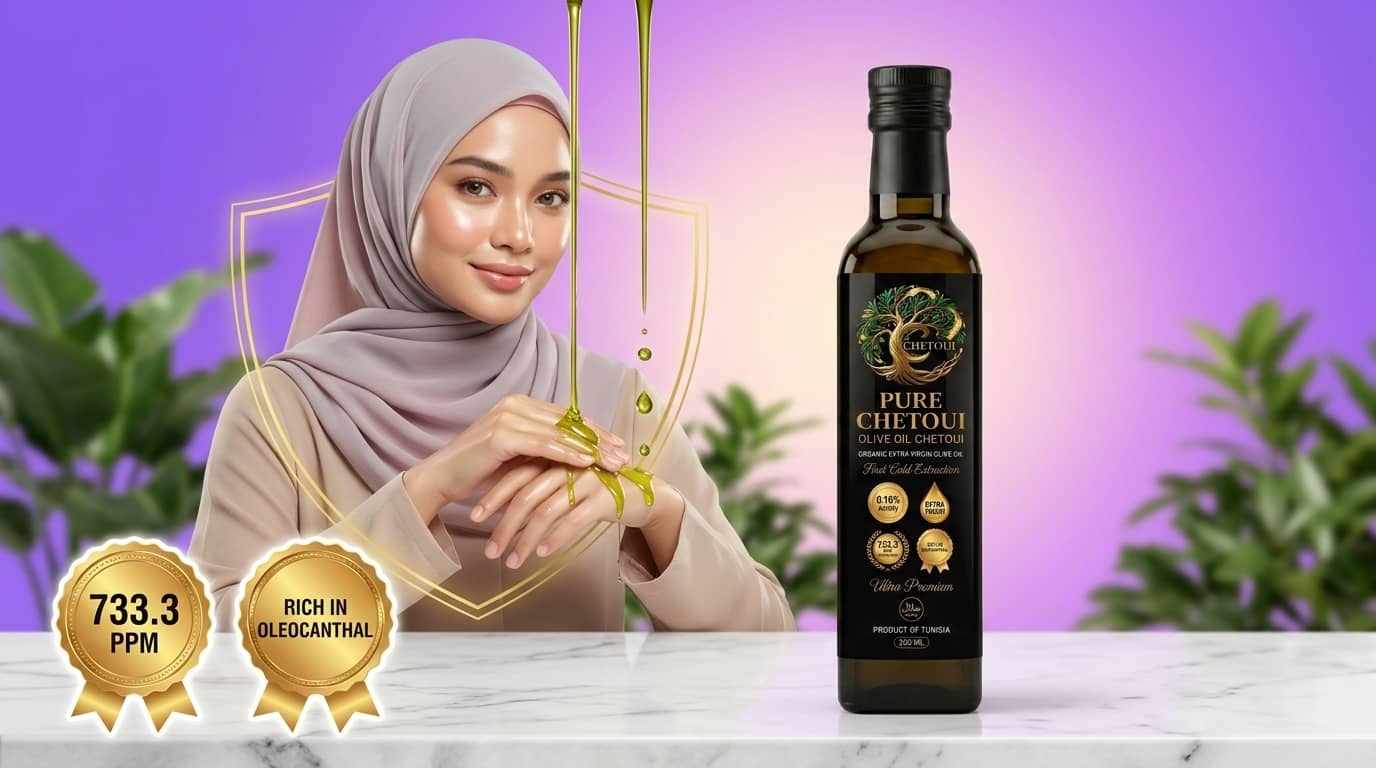
Olive oil for skin and hair is one of the oldest beauty secrets in the world — and modern dermatology now confirms why it works so well. Women across the Mediterranean, North Africa, and Southeast Asia have relied on olive oil for skin and hair care for thousands of years. Today, peer-reviewed research shows that high-quality extra virgin olive oil delivers squalene, Vitamin E, and polyphenols directly to skin cells and hair follicles, producing results that rival expensive synthetic serums.
This comprehensive guide explains the proven science behind using olive oil for skin and hair, practical application methods, and why the quality of olive oil you choose determines everything. Whether you are exploring olive oil skin benefits for the first time or looking for the best olive oil hair treatment, you will find evidence-based answers below.
Table of Contents
- Why Olive Oil Works for Skin and Hair: The Science
- 7 Proven Olive Oil Skin Benefits You Should Know
- Olive Oil Hair Treatment: 5 Ways It Transforms Your Hair
- How to Use Olive Oil for Skin and Hair: Step-by-Step Guide
- Why Most Olive Oils Fail for Beauty (and What to Choose Instead)
- Internal vs Topical: Which Delivers Better Results?
- Minyak Zaitun untuk Kulit dan Rambut: Panduan untuk Wanita Malaysia
- Olive Oil vs Popular Skincare Ingredients: Comparison
- Frequently Asked Questions

Why Olive Oil Works for Skin and Hair: The Science
The effectiveness of olive oil for skin and hair is not folk wisdom — it is biochemistry. Three specific compounds in premium extra virgin olive oil interact directly with your skin’s structure and hair’s protein matrix. Understanding these compounds explains why olive oil outperforms many synthetic alternatives and why quality matters so much.
Squalene — Your Skin’s Natural Moisture Shield
Your skin naturally produces squalene as a critical component of its moisture barrier. This lipid makes up roughly 12% of your skin’s surface oils and keeps your complexion hydrated, supple, and protected. However, squalene production begins declining after age 25 and drops dramatically after 30 — which is exactly when many women start noticing dryness, fine lines, and dullness.
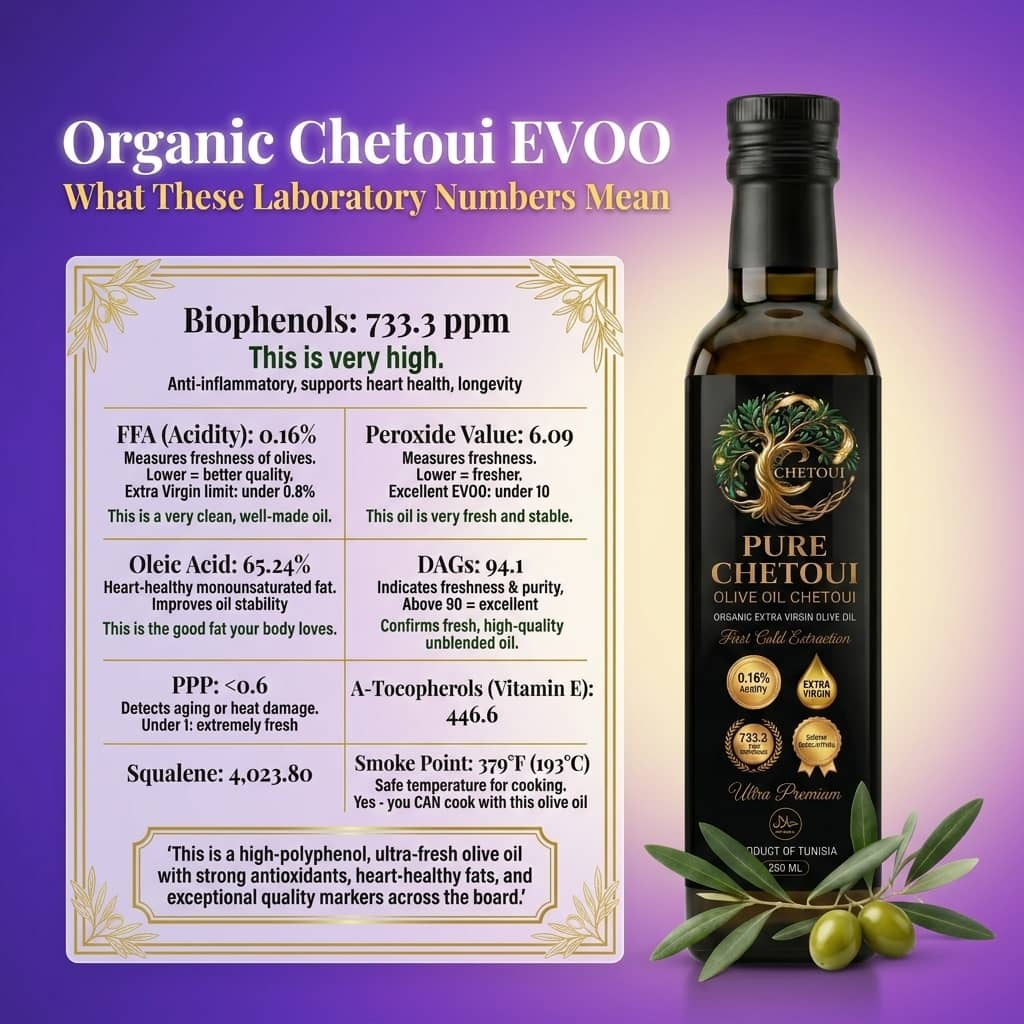
High-quality olive oil is one of the richest plant-based sources of squalene on earth. Pure Chetoui olive oil contains 4,023.80 mg/kg of natural squalene — a concentration comparable to what you would find in premium skincare serums retailing at RM 300 or more per bottle.
Squalene from olive oil for skin and hair provides these specific benefits:
- Non-comedogenic absorption — penetrates skin without clogging pores, making it suitable even for combination skin
- Lipid barrier restoration — rebuilds the protective layer that locks moisture in and keeps irritants out
- Natural emollient action — softens rough, dry, or flaking patches on the face, elbows, and heels
- Antioxidant protection — neutralises UV-induced free radicals that cause premature aging (not a replacement for sunscreen)
- Hair cuticle sealing — creates a light protective layer that adds shine and reduces moisture loss from the hair shaft
A 2009 study published in the Journal of Lipid Research confirmed that squalene is one of the primary mechanisms by which olive oil protects skin from oxidative damage. The researchers found that topical squalene application significantly reduced lipid peroxidation — the chemical process that breaks down cell membranes and accelerates aging.
Vitamin E (Alpha-Tocopherols) — The Antioxidant Shield
Vitamin E is one of the most extensively studied skincare antioxidants in dermatological literature. Pure Chetoui provides 446.6 mg/kg of alpha-tocopherols — a concentrated dose that protects cell membranes from the free radical damage caused by pollution, UV exposure, and environmental stress.
For hair specifically, Vitamin E strengthens follicles, supports healthy growth cycles, and reduces oxidative stress on the scalp — a key factor in conditions like thinning hair and premature greying. A 2010 clinical trial in Tropical Life Sciences Research found that tocotrienol supplementation (a form of Vitamin E) increased hair count by 34.5% in participants over eight months.
Polyphenols — The Anti-Aging Powerhouses
Hydroxytyrosol and oleocanthal — the same polyphenols that give olive oil its anti-inflammatory power — also protect skin cells from oxidative stress at the cellular level. These polyphenols inhibit the enzymes (collagenase and elastase) that break down collagen and elastin, the structural proteins responsible for skin firmness and elasticity.
At 733.3 ppm total biophenols, Pure Chetoui delivers therapeutic concentrations of these protective compounds — far above the 250 ppm threshold required for the EU health claim on polyphenols. These olive oil skin benefits work whether the oil is taken internally or applied topically, and the combination of both methods produces the strongest results.
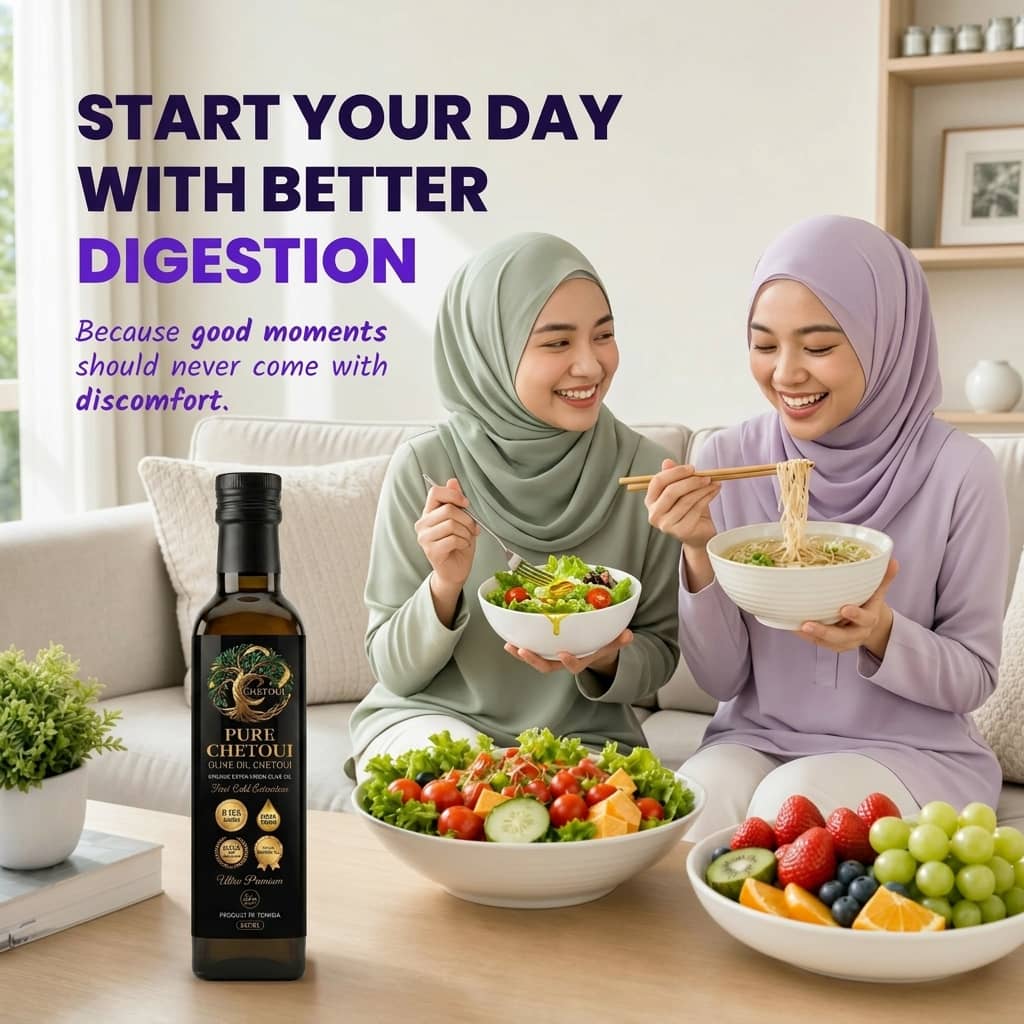

7 Proven Olive Oil Skin Benefits You Should Know
Understanding olive oil skin benefits helps you use this natural ingredient strategically rather than randomly. Here are seven proven ways that olive oil for skin and hair transforms your complexion, backed by clinical evidence.
1. Deep Moisturising Without Greasiness
Unlike heavy creams that sit on the skin surface, olive oil’s fatty acid profile closely matches your skin’s natural oils. The primary fatty acid — oleic acid at 65.24% — is identical to what your sebaceous glands produce. This biochemical compatibility means olive oil absorbs efficiently into deeper skin layers without leaving a greasy residue, especially when you apply a small amount to slightly damp skin after cleansing.
This deep moisturising effect is why so many women report that olive oil makes their skin feel “hydrated from within” rather than just coated on top.
2. Anti-Aging and Wrinkle Prevention
Oxidative stress is the primary driver of premature aging — it breaks down collagen, damages elastin, and creates the fine lines and wrinkles that make skin look older than it is. The triple combination of squalene, Vitamin E, and polyphenols in high-polyphenol olive oil creates a powerful shield against this damage.
A 2012 study published in PLOS ONE examined 1,264 French women over 40 and found that higher olive oil consumption was significantly associated with fewer visible signs of photo-aging, including wrinkles, age spots, and loss of skin elasticity.
3. Healing Dry and Irritated Skin
Olive oil has a well-documented history in clinical settings — hospitals have used it for wound care, and neonatal units apply it to protect premature babies’ delicate skin. The anti-inflammatory properties from oleocanthal calm irritation and redness, while squalene supports the skin’s natural repair processes.
For eczema-prone skin, the acidity level of your olive oil matters enormously. Pure Chetoui’s free fatty acid level of just 0.16% FFA means it is far gentler than higher-acidity oils that can trigger irritation and breakouts. This ultra-low acidity is a direct result of early harvest timing and cold extraction within hours of picking.
4. Natural Makeup Remover
Olive oil dissolves makeup — including waterproof mascara and long-wear foundation — gently and effectively through the principle of “like dissolves like.” The oil-based compounds in makeup break down when they meet olive oil’s fatty acids. Apply a small amount to a cotton pad, wipe in gentle circular motions, then follow with your regular cleanser. Unlike chemical removers that strip your skin, olive oil nourishes while it cleans.
5. Brightening Dull Complexion
The combination of squalene and polyphenols in olive oil for skin and hair promotes cellular turnover and protects new skin cells as they surface. Over four to six weeks of consistent use, many women notice a visible improvement in skin radiance. The Vitamin E content also helps fade minor hyperpigmentation and dark spots by inhibiting melanin overproduction in affected areas.
6. Under-Eye Treatment for Dark Circles
The skin around your eyes is the thinnest on your body — roughly 0.5mm compared to 2mm elsewhere on your face. This delicate area is the first to show signs of aging, dehydration, and fatigue. The squalene in olive oil hydrates this thin skin without the heaviness of synthetic eye creams, while Vitamin E addresses fine lines and the oxidative damage that contributes to dark circles.
7. Strengthening Nails and Cuticles
Brittle nails and dry cuticles respond quickly to olive oil treatment. One drop massaged into each nail bed softens cuticles within minutes and, with regular use, promotes stronger, more flexible nail growth. The fatty acids penetrate the nail plate and reduce water loss, which is the primary cause of peeling and breakage.
Olive Oil Hair Treatment: 5 Ways It Transforms Your Hair
An effective olive oil hair treatment addresses the root causes of common hair problems — protein loss, moisture depletion, scalp inflammation, and cuticle damage. Here is how olive oil for skin and hair works specifically for your hair, with methods you can start using today.
1. Pre-Shampoo Deep Conditioning Mask
This is the single most effective olive oil hair treatment method. Apply warm (not hot) olive oil from mid-lengths to ends, concentrating on the driest areas. Wrap your hair in a towel or shower cap and leave for 30 to 60 minutes, then shampoo out — you may need two washes to remove all the oil.
The science behind this works because oleic acid penetrates the hair shaft and reduces protein loss during the washing process. A study published in the Journal of Cosmetic Science found that oils with high oleic acid content significantly reduced hygral fatigue — the repeated swelling and contracting of hair fibres during washing that causes breakage and frizz over time.
2. Scalp Health and Dandruff Treatment
A healthy scalp is the foundation of healthy hair growth. The anti-inflammatory polyphenols in olive oil address the root causes of common scalp conditions:
- Dandruff — reduces the inflammation and dryness that cause flaking, without the harsh chemicals found in medicated shampoos
- Itchy scalp — soothes irritation while maintaining the scalp’s natural oil balance, unlike stripping shampoos
- Sluggish growth — improved scalp circulation from massage combined with follicle nourishment supports healthier, faster growth cycles
- Oily scalp with dry ends — paradoxically, massaging olive oil into an oily scalp can help regulate sebum production over time by signalling to your glands that they do not need to overproduce
3. Frizz Control and Natural Shine
A tiny amount — just 2 to 3 drops — smoothed between your palms and then over dry hair tames flyaways and adds luminous, natural shine without weighing your hair down or making it look greasy. The squalene content creates a light protective layer that reflects light beautifully and seals the hair cuticle against humidity, making this technique especially valuable in Malaysia’s tropical climate.
4. Split End Prevention and Protection
While no product can repair split ends (they need trimming), regular olive oil hair treatment prevents future splitting by keeping the hair shaft moisturised, flexible, and resilient. The Vitamin E content at 446.6 mg/kg strengthens hair from within, while the oleic acid maintains the structural integrity of each strand. Women who incorporate weekly olive oil treatments typically notice a significant reduction in new split ends within two to three months.
5. Colour Protection for Treated Hair
Chemically treated and colour-processed hair is especially vulnerable to dryness, breakage, and colour fading. Olive oil is gentle enough for colour-treated hair and actually helps maintain vibrancy by sealing the cuticle layer that holds colour pigments in place. Using olive oil as a pre-shampoo treatment before every wash creates a protective buffer that reduces the stripping effect of shampoo on colour-treated strands.

How to Use Olive Oil for Skin and Hair: Step-by-Step Guide
Knowing how to use olive oil for skin and hair properly makes the difference between disappointing results and genuinely transformative outcomes. These methods are based on dermatological recommendations and feedback from thousands of Pure Chetoui customers across Malaysia.
For Face (Daily Routine)
- Night moisturiser: After cleansing, apply 3 to 4 drops to slightly damp skin. Massage gently in upward circular motions. Best used at night so the squalene and Vitamin E absorb fully while you sleep and your skin’s natural repair processes are most active.
- Under-eye treatment: Dab one drop under each eye using your ring finger (it applies the least pressure). The squalene and Vitamin E address fine lines, puffiness, and dark circles simultaneously.
- Lip treatment: Apply a single drop to lips before bed for soft, deeply hydrated lips by morning. This is especially effective in air-conditioned environments that dehydrate lip tissue.
- Makeup remover: Massage 4 to 5 drops across your entire face including eyes, then wipe gently with a warm damp cloth. Follow with your regular cleanser for a double-cleanse method.
For Body (Weekly and Daily)
- After-shower moisturiser: Apply to damp skin immediately after showering while your pores are still open. Focus on elbows, knees, and heels — the areas that get driest in Malaysia’s air-conditioned offices and shopping centres. The squalene locks moisture into damp skin far more effectively than applying to dry skin.
- Stretch mark prevention: Regular application during pregnancy helps maintain skin elasticity during rapid stretching. The squalene supports collagen and elastin production, while Vitamin E promotes skin repair and renewal. Apply twice daily to the abdomen, hips, and thighs from the second trimester onwards.
- Cuticle and nail treatment: One drop on each nail bed, massaged in thoroughly, keeps cuticles soft and promotes stronger nail growth. Results are visible within two to three weeks of daily application.
For Hair (Weekly Treatment)
- Weekly hair mask: Warm 2 to 3 tablespoons of olive oil gently (body temperature — never microwave). Apply from roots to ends, wrap in a shower cap, leave for 30 to 60 minutes, then shampoo out. You may need two washes to fully remove the oil.
- Daily frizz control: Rub 1 to 2 drops between your palms and smooth over dry ends only. Avoid the roots if you have fine or oily hair.
- Scalp massage: Once a week, warm a tablespoon of olive oil and massage into your scalp using your fingertips in circular motions for 5 to 10 minutes. This stimulates blood flow, nourishes follicles, and distributes the oil’s active compounds directly where they are needed most.
Why Most Olive Oils Fail for Beauty (and What to Choose Instead)
Here is the critical point that most beauty blogs miss: the olive oil for skin and hair that you pick off a supermarket shelf is almost always refined, low-polyphenol oil that delivers virtually none of the benefits described in this article. The squalene content, polyphenol levels, and Vitamin E concentration that make olive oil effective for beauty all depend on specific quality factors:
- Olive variety matters enormously — Chetoui olives from Northern Tunisia naturally produce significantly more squalene and polyphenols than most other cultivars, which is why Pure Chetoui delivers 4,023.80 mg/kg of squalene versus the 200-800 mg/kg typical of standard olive oils
- Harvest timing is critical — early harvest in November preserves maximum bioactive compounds; late-harvest oils have far lower polyphenol and squalene levels
- Processing method determines potency — cold extraction within hours of picking retains what heat processing and delayed milling destroy
- Freshness determines safety — oxidised olive oil can actually irritate skin and cause breakouts rather than helping; look for a recent harvest date, not just a “best before” date
- Lab testing proves claims — any olive oil making beauty claims should have third-party lab certificates showing actual squalene, polyphenol, and Vitamin E levels
This is precisely why a RM 15 bottle of refined olive oil from the supermarket will never give you the same results as a lab-tested, high-polyphenol EVOO like Pure Chetoui (RM 109/250ml). The difference is not about branding — it is about measurable biochemistry. To understand more about identifying genuine high-quality olive oil, read our guide on minyak zaitun asli vs palsu.
Internal vs Topical: Which Delivers Better Results?
Both internal and topical use of olive oil for skin and hair deliver real benefits — but through different mechanisms and timelines. The most effective approach combines both methods for comprehensive results.
Internal Use (1 Tablespoon Daily)
Taking olive oil on an empty stomach each morning delivers squalene, polyphenols, and Vitamin E through your bloodstream to every cell in your body. This approach benefits your skin and hair from the inside out by providing the raw materials your body needs to build healthy cell membranes, produce collagen, and maintain the hair growth cycle. Internal effects typically become visible after 4 to 6 weeks of consistent daily use.
Topical Use (Direct Application)
Topical application provides immediate local effects — instant moisturising, surface-level protection, and targeted repair at the application site. The squalene absorbs into the upper skin layers within minutes, providing quick relief for dryness and irritation. Combined with internal use, the results are noticeably faster and more pronounced.
The Combined Approach
Many Malaysian women use Pure Chetoui both ways — a tablespoon in the morning on an empty stomach for systemic internal health benefits, and a few drops applied topically in the evening for targeted olive oil skin benefits and olive oil hair treatment. This dual protocol addresses beauty from both inside and outside simultaneously, which no purely topical product can match.
Minyak Zaitun untuk Kulit dan Rambut: Panduan untuk Wanita Malaysia
Bagi wanita Malaysia yang mencari kecantikan semulajadi, minyak zaitun untuk kulit dan rambut adalah pilihan yang terbukti berkesan. Iklim tropika Malaysia yang lembap dan panas menjadikan minyak zaitun sangat sesuai kerana ia melembapkan tanpa rasa berminyak, tidak menyumbat pori-pori, dan memberikan perlindungan antioksida terhadap pendedahan matahari harian.
Pure Chetoui, dengan 4,023.80 mg/kg squalene dan 733.3 ppm biophenol, menawarkan kualiti yang jauh melebihi minyak zaitun biasa yang dijual di pasaraya. Setiap botol diuji makmal untuk memastikan ketulenan dan kepekatan bahan aktif yang tinggi — menjadikannya pelaburan kecantikan yang berbaloi berbanding krim dan serum sintetik yang mahal.
Olive Oil vs Popular Skincare Ingredients: Comparison
How does olive oil for skin and hair compare to other popular skincare ingredients? This comparison table shows why premium extra virgin olive oil holds its own — and often outperforms — expensive alternatives.
| Feature | Premium EVOO (Pure Chetoui) | Synthetic Squalane Serum | Argan Oil | Coconut Oil |
|---|---|---|---|---|
| Natural Squalene Content | 4,023.80 mg/kg | Synthetic (derived from sugar cane) | ~310 mg/kg | Negligible |
| Vitamin E (Tocopherols) | 446.6 mg/kg | Usually absent | ~620 mg/kg | ~10 mg/kg |
| Anti-Inflammatory Polyphenols | 733.3 ppm (oleocanthal, hydroxytyrosol) | None | Low | None |
| Comedogenic Rating | 2 (low — non-comedogenic for most) | 0-1 | 0 | 4 (high — clogs pores) |
| Hair Penetration | High (oleic acid penetrates shaft) | Minimal | Moderate | High (lauric acid) |
| Internal Health Benefits | Cardiovascular, anti-inflammatory, gut health | Not for consumption | Limited research | Saturated fat concerns |
| Price (Malaysia) | RM 109/250ml | RM 150-350/30ml | RM 80-150/100ml | RM 15-30/250ml |
| Award Recognition | NYIOOC: 82 Awards (46 Gold, 36 Silver) | None | Varies | None |
Frequently Asked Questions About Olive Oil for Skin and Hair
Will olive oil clog my pores and cause acne?
High-quality, low-acidity extra virgin olive oil is non-comedogenic for most skin types. The key is using genuine EVOO with very low free fatty acid levels. Pure Chetoui’s FFA of just 0.16% makes it far gentler than higher-acidity oils that can trigger breakouts. If you have very oily or acne-prone skin, start with a small amount on damp skin at night and observe how your skin responds over one week. Most women find that olive oil for skin and hair actually helps regulate oil production rather than worsening it.
Can I use olive oil on my face every day?
Yes — many women use it daily as a night moisturiser with excellent results. The key is quantity: use just 3 to 4 drops for your entire face and apply to slightly damp skin for optimal absorption. If you have oily skin, start with every other night for the first two weeks and adjust based on how your skin responds. The squalene in olive oil is bioidentical to what your skin naturally produces, so daily use is generally well tolerated.
How long does it take to see results on skin and hair?
Topical moisturising effects are immediate — you will feel softer, more hydrated skin within minutes. For deeper benefits like reduced fine lines, improved skin texture, and visibly stronger hair, expect 4 to 6 weeks of consistent daily use with both internal and topical application. Hair growth improvements from scalp treatments typically take 8 to 12 weeks to become noticeable, as hair grows approximately 1 to 1.5 centimetres per month.
Is olive oil safe for coloured or chemically treated hair?
Absolutely. Olive oil is gentle enough for colour-treated, keratin-treated, and chemically relaxed hair. It actually helps maintain colour vibrancy by sealing the cuticle layer that holds pigment. Use olive oil for skin and hair as a pre-shampoo treatment before every wash to protect chemically treated hair from the stripping effects of shampoo and water. Many colourists recommend oil treatments between salon visits to extend the life of your colour.
Can I mix olive oil with other natural ingredients for better results?
Yes, olive oil blends well with several complementary ingredients. For a powerful face mask, mix 1 tablespoon of olive oil with 1 teaspoon of raw honey and a squeeze of lemon juice — the honey adds humectant moisture while lemon provides gentle brightening. For hair, combine olive oil with a mashed avocado for extra conditioning, or add a few drops of rosemary essential oil to your scalp massage for enhanced circulation. Always patch-test any new combination on a small area first.
What is the difference between olive oil and olive squalane serums for skincare?
Olive squalane serums contain only one isolated compound — squalane (the hydrogenated, shelf-stable form of squalene). While effective as a lightweight moisturiser, these serums lack the polyphenols, Vitamin E, and fatty acid complex that make whole extra virgin olive oil for skin and hair so effective. Premium EVOO like Pure Chetoui provides squalene alongside 733.3 ppm of protective polyphenols and 446.6 mg/kg of Vitamin E — a synergistic combination that isolated squalane cannot replicate. Additionally, you can use EVOO both internally and topically, while squalane serums are topical only.
Does the origin of olive oil matter for beauty benefits?
Origin matters significantly because olive cultivar, climate, and soil directly determine the squalene, polyphenol, and Vitamin E content of the oil. Chetoui olives from Northern Tunisia are renowned for exceptionally high polyphenol and squalene levels due to the region’s hot, dry climate and mineral-rich soil. Pure Chetoui is sourced from this specific terroir and has earned 82 NYIOOC awards (46 Gold, 36 Silver) — the world’s most prestigious olive oil competition — confirming its quality through blind expert assessment.
Can men use olive oil for skin and hair care?
Of course. The biochemistry of olive oil for skin and hair works identically regardless of gender. Men benefit from olive oil as a post-shave moisturiser (it soothes razor burn and prevents ingrown hairs), a beard conditioner (softens coarse facial hair and hydrates the skin underneath), and a scalp treatment for thinning hair. The non-greasy absorption means it works well under daily moisturisers or on its own without looking shiny.